
Baietan Mixc
Exhibition
Space
Location
Guangzhou, China
Programme
Commercial Leasing Exhibition Space
Client
CR Mixc Lifestyle
GFA
688sqm
Work Scope
Interiors – Concept, SD, DD, CD, CA
Landscape – Concept
Current Status
Completed
GZ BAIETAN Mixc is located in Fatee, Fangcun of Guangzhou, a place shaped by water transport and long renowned for its flower culture. This area carries a profound historical lineage and forms an important origin of Lingnan garden tradition and literati aesthetics. Rooted in this context, the project develops an exhibition space that translates local memory through contemporary spatial language, allowing heritage to continue within a present-day setting.
GZ BAIETAN Mixc is located in Fatee, Fangcun of Guangzhou, a place shaped by water transport and long renowned for its flower culture. This area carries a profound historical lineage and forms an important origin of Lingnan garden tradition and literati aesthetics.
Rooted in this context, the project develops an exhibition space that translates local memory through contemporary spatial language, allowing heritage to continue within a present-day setting.
Transformation of Spatial Functions
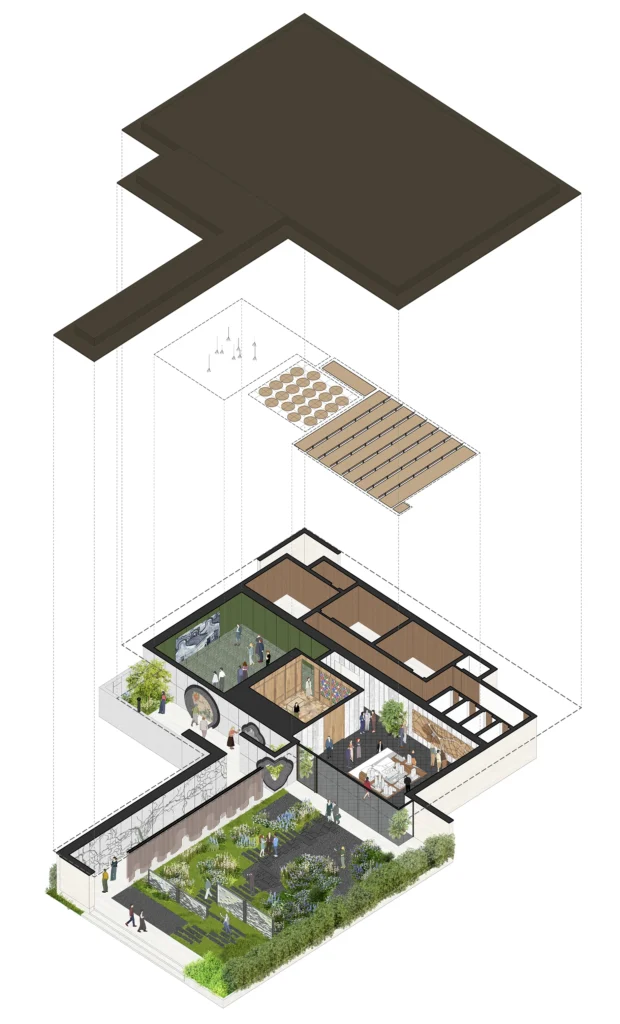
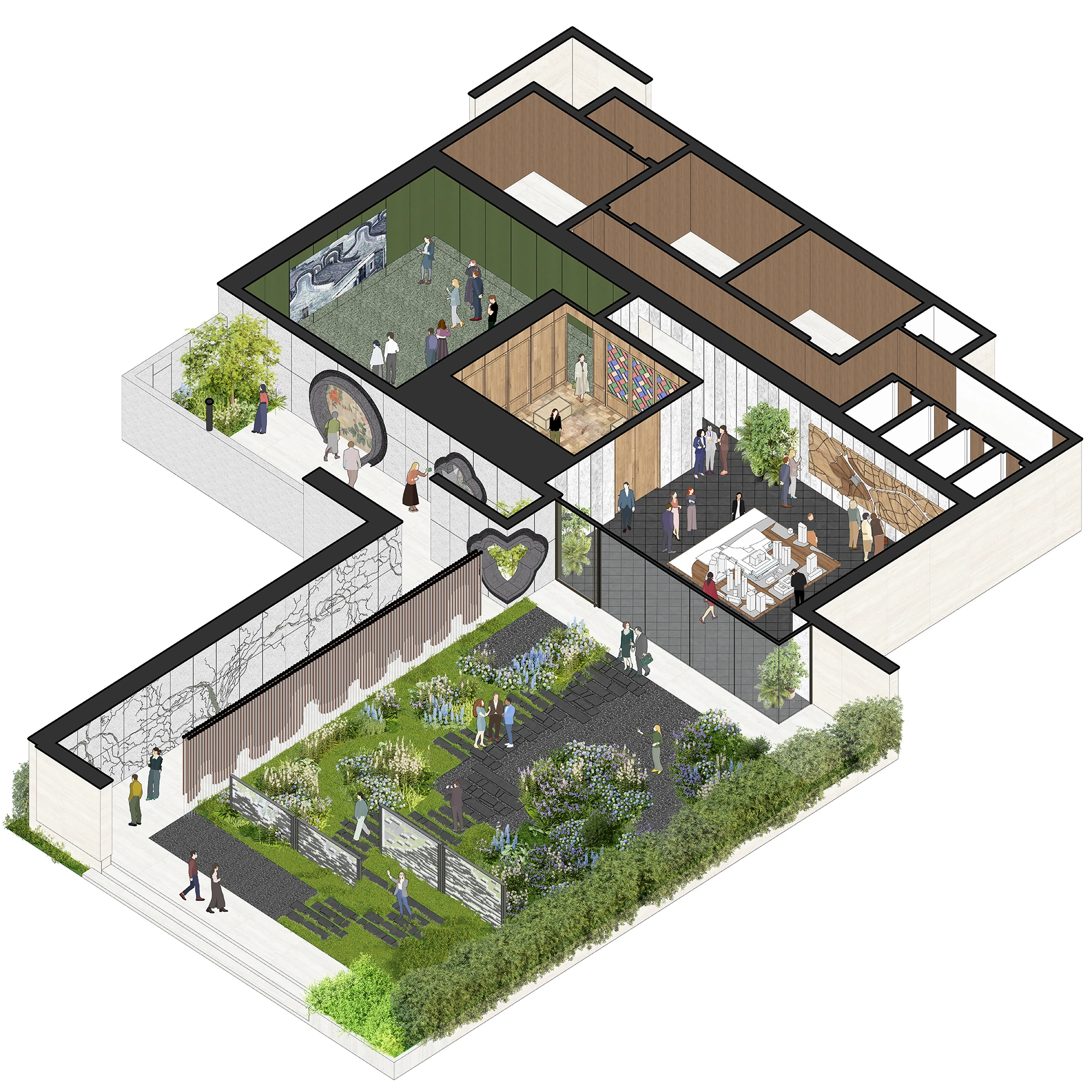
The original site lies within Xinyi Guild Hall along the Pearl River, about 1.5 km from GZ BAIETAN Mixc. The building, formerly a residential sales reception center, was organized around open negotiation areas for efficient client service.
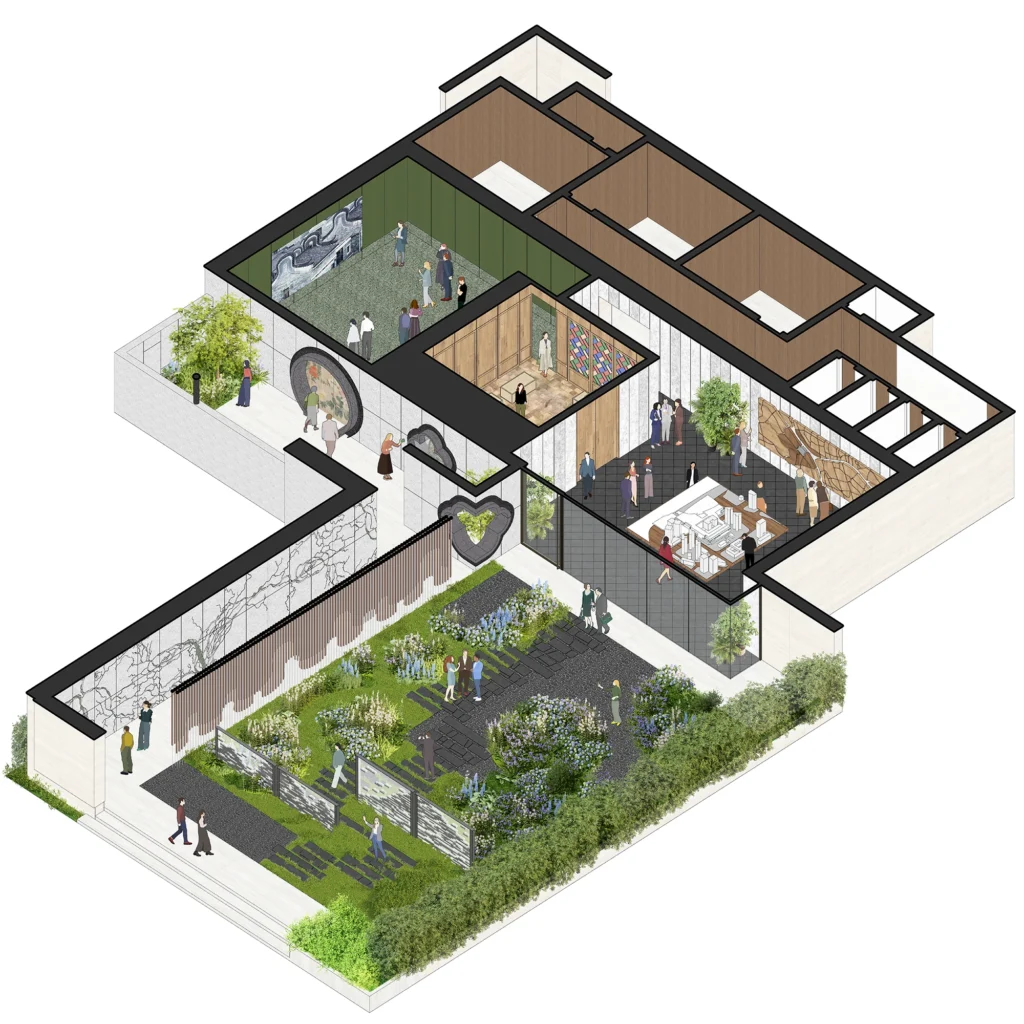
The renovation reorganizes spatial function by refining circulation, enhancing privacy and comfort, and introducing a coherent exhibition logic with local cultural references.
The space is thus transformed from a reception-oriented venue into a narrative exhibition setting, bringing renewed value and vitality to the building.
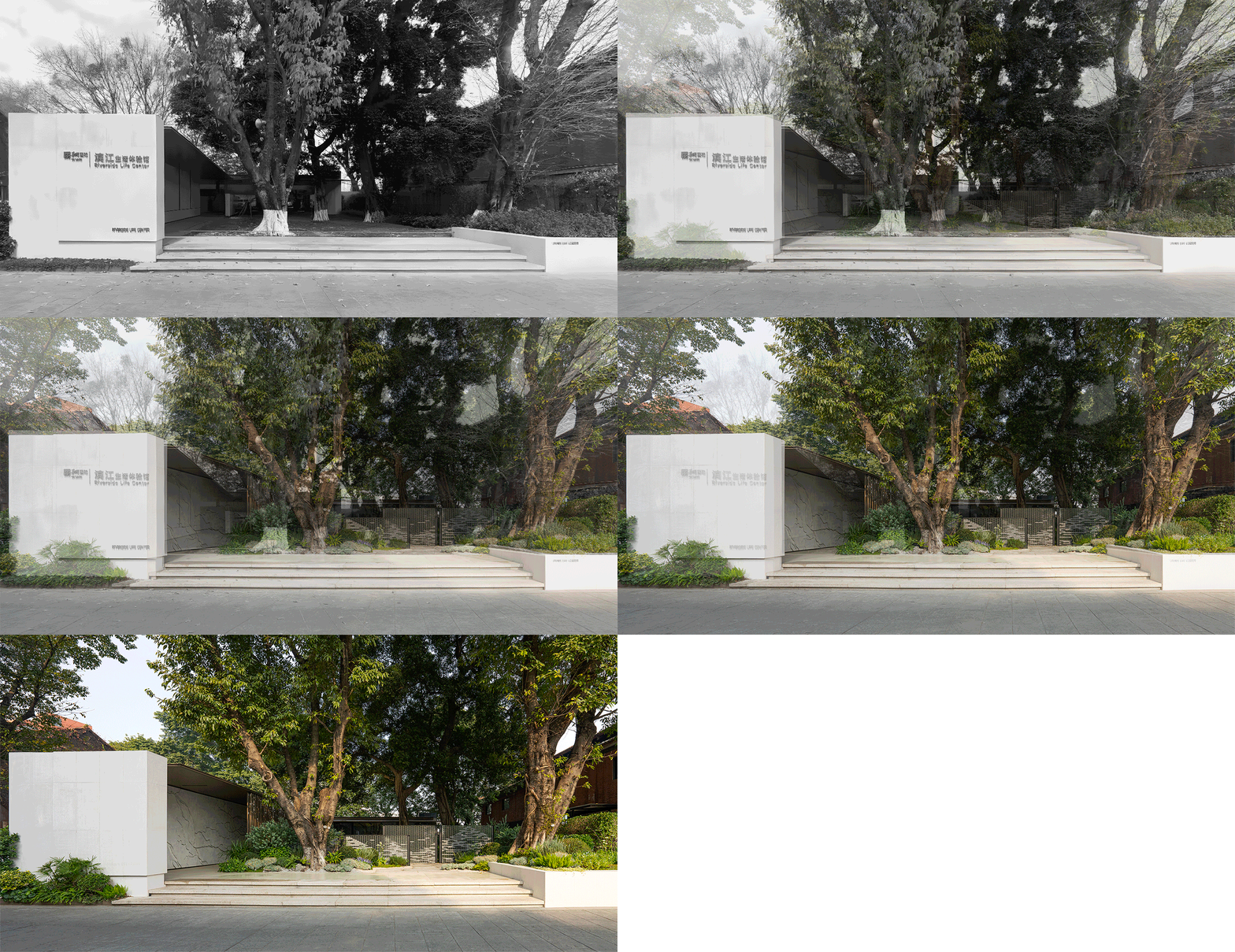
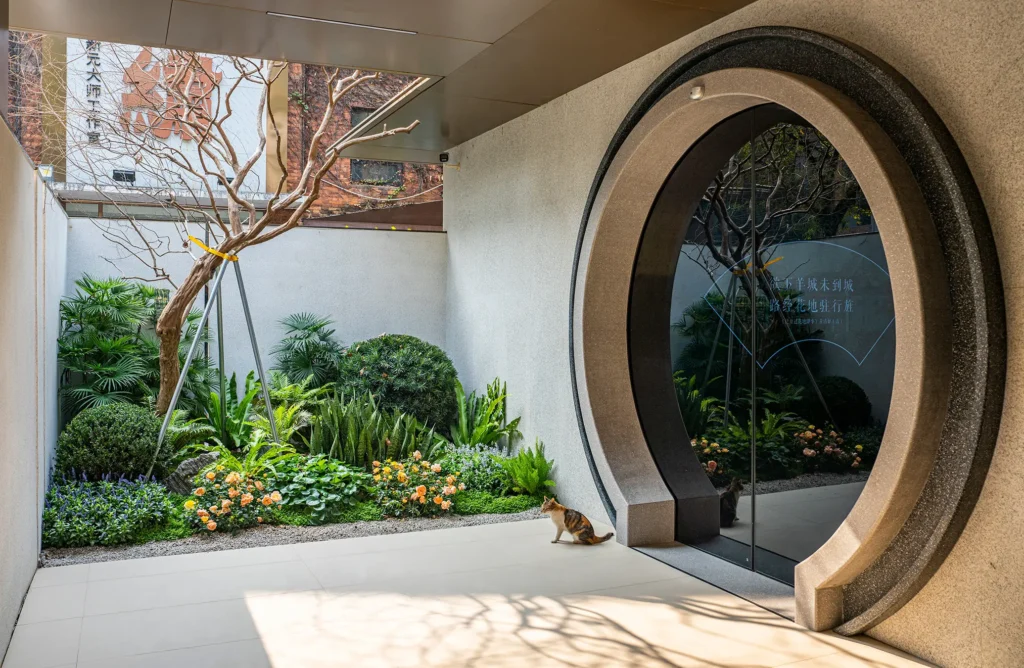
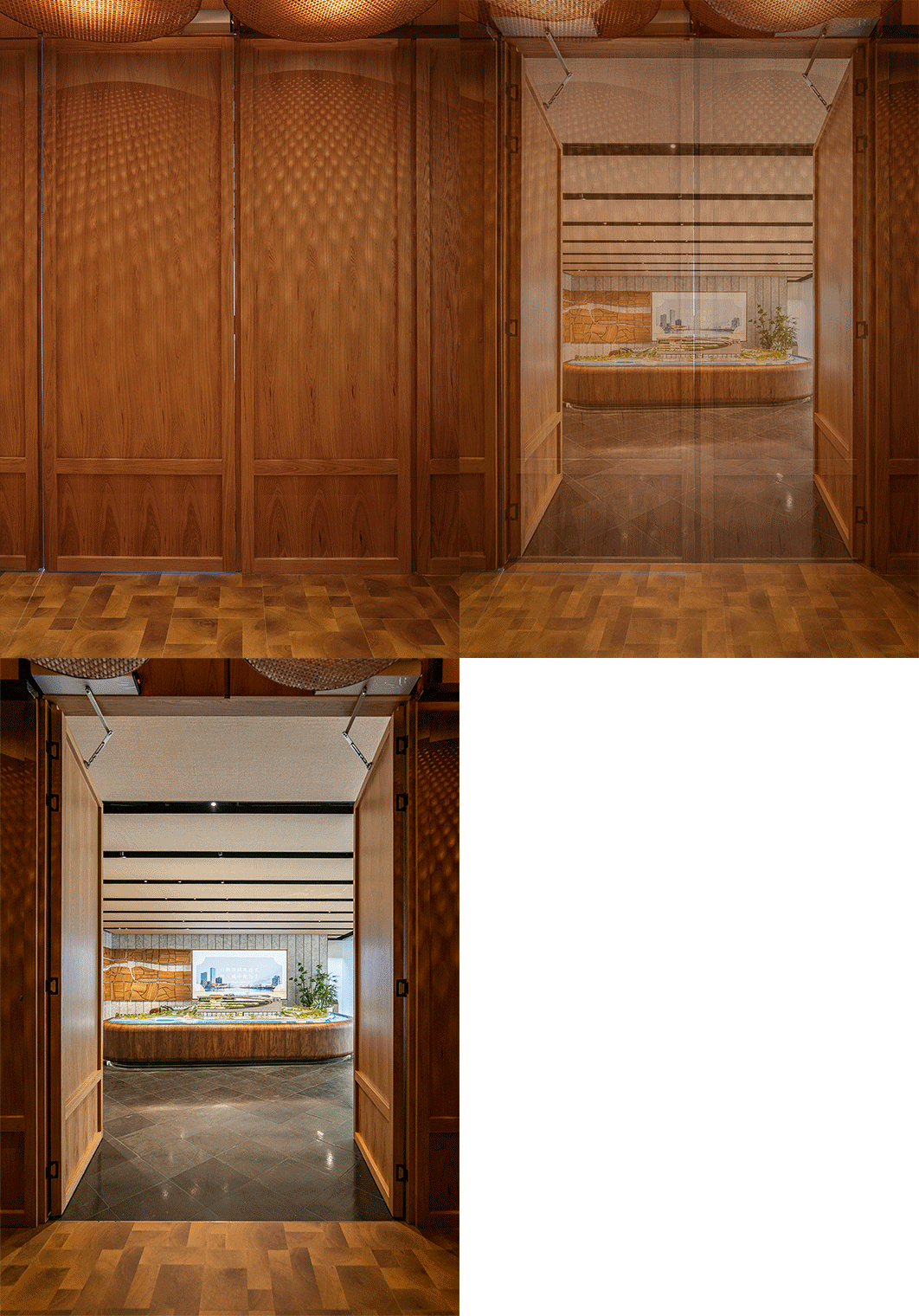
Main Entrance – Before and After
A Walk in the Garden
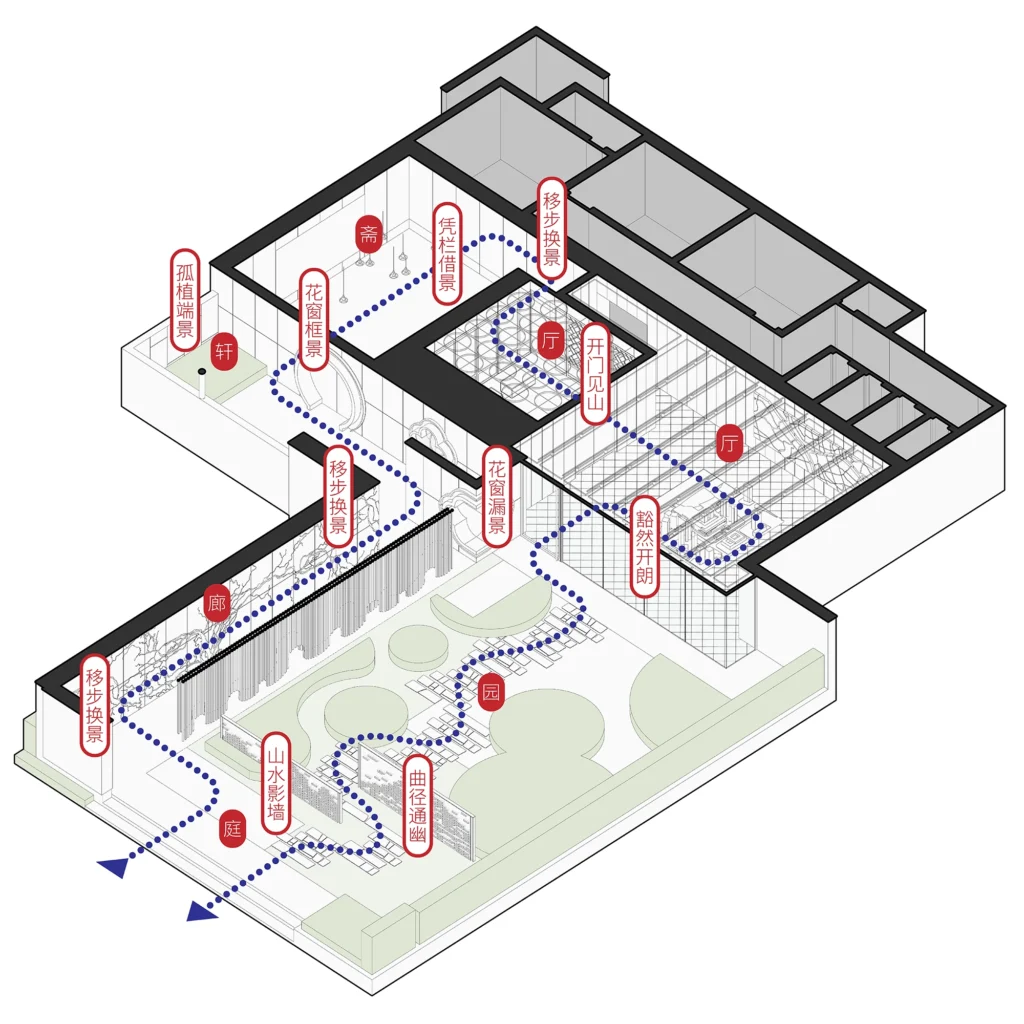
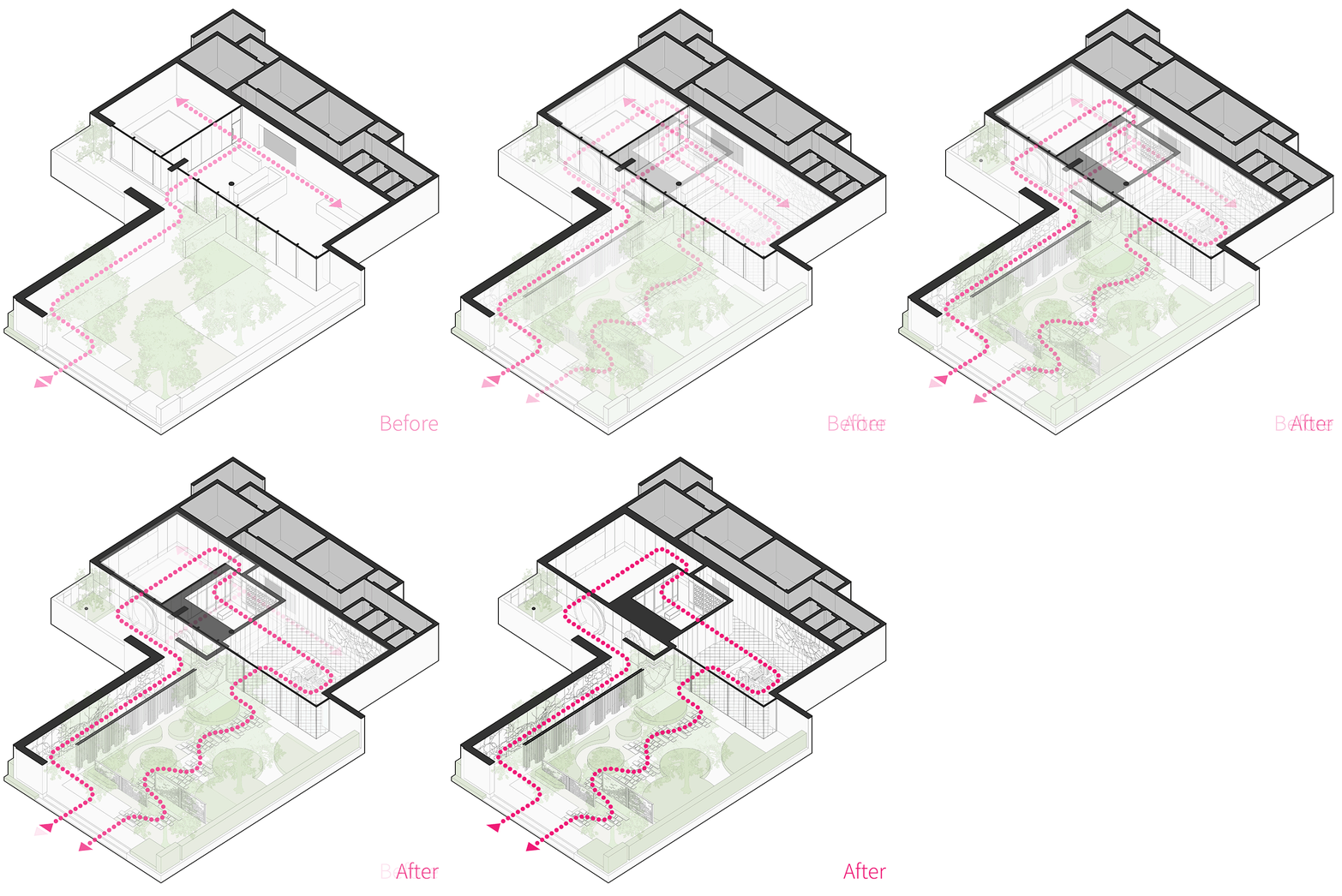
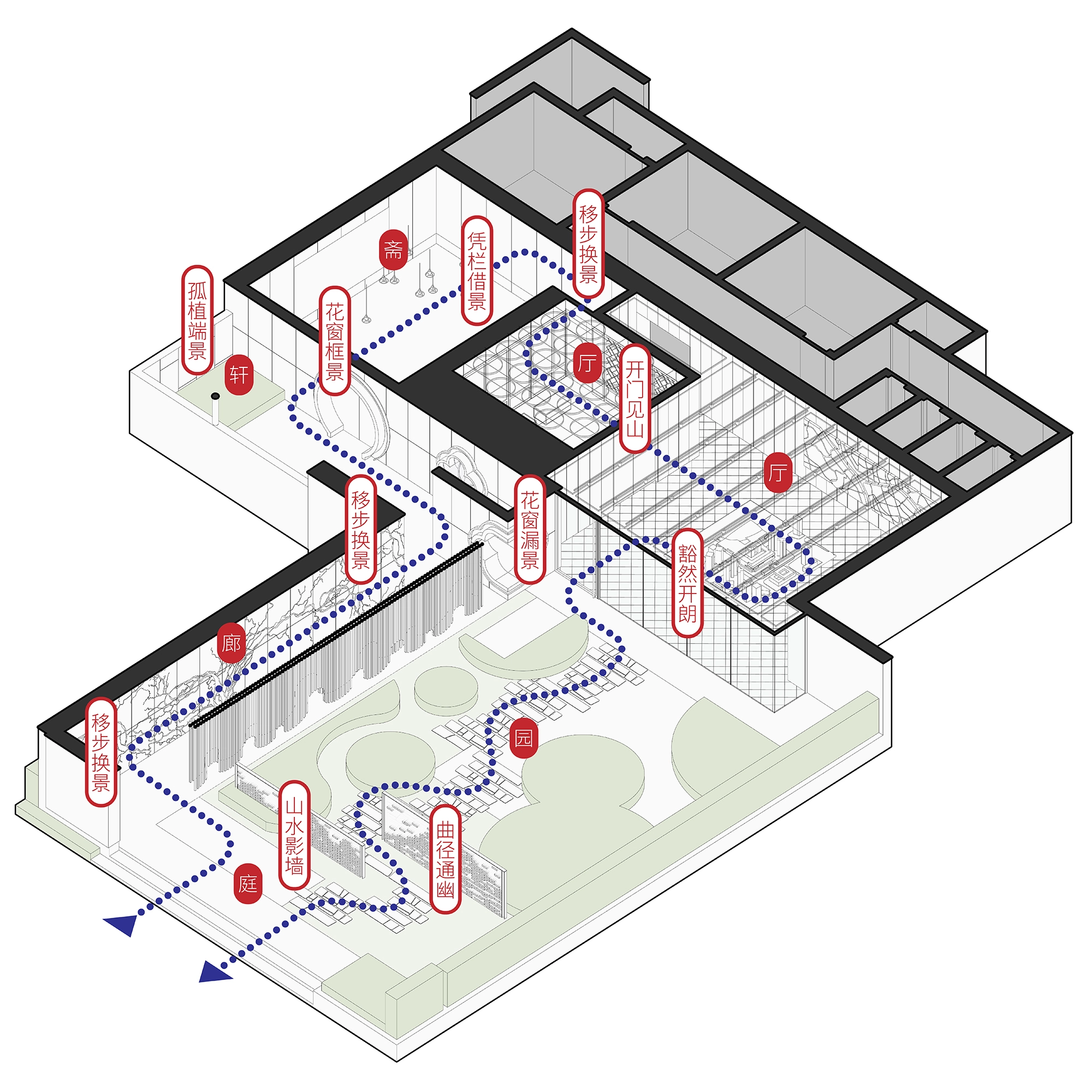
Drawing on Lingnan garden principles, the design translates the idea of “changing views with every step” into a contemporary exhibition route.
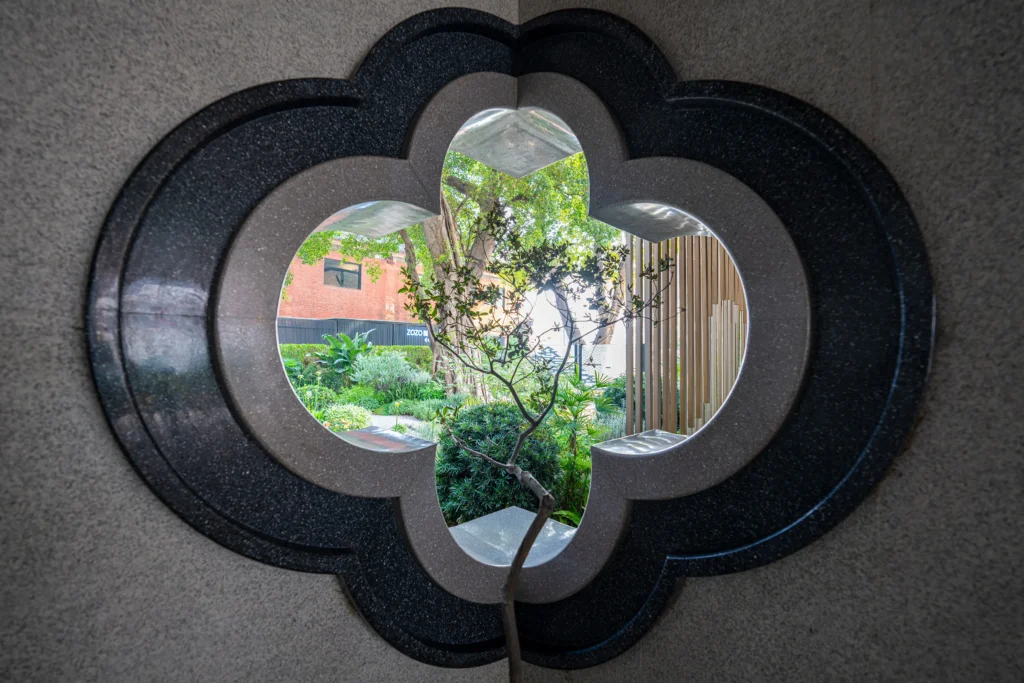
Screens, turns, framed views, and borrowed scenery mediate between concealment and revelation, contraction and release, guiding visitors to perceive the history of Fatee through movement.
The visit becomes a layered and rhythmic spatial experience.
Like a walk in a Lingnan garden, exhibition goers discover a new “scene” at every turn at this Baietan Exhibition.
Co-creation of Narrative & Space
The exhibition narrative took shape through an iterative dialogue between the design team and client, the storyline and spatial sequence developed in tandem.
The visitor route was refined until content, space, and atmosphere joined together coherently, translating them into a perceptible spatial progession.
Beyond conventional exhibits, multi-sensory elements such as sounds, scents, and lighting were introduced, allowing an immersive story to emerge, guiding movement, marking transitions, defining moments of pause, and ultimately, leaving a lasting impression.
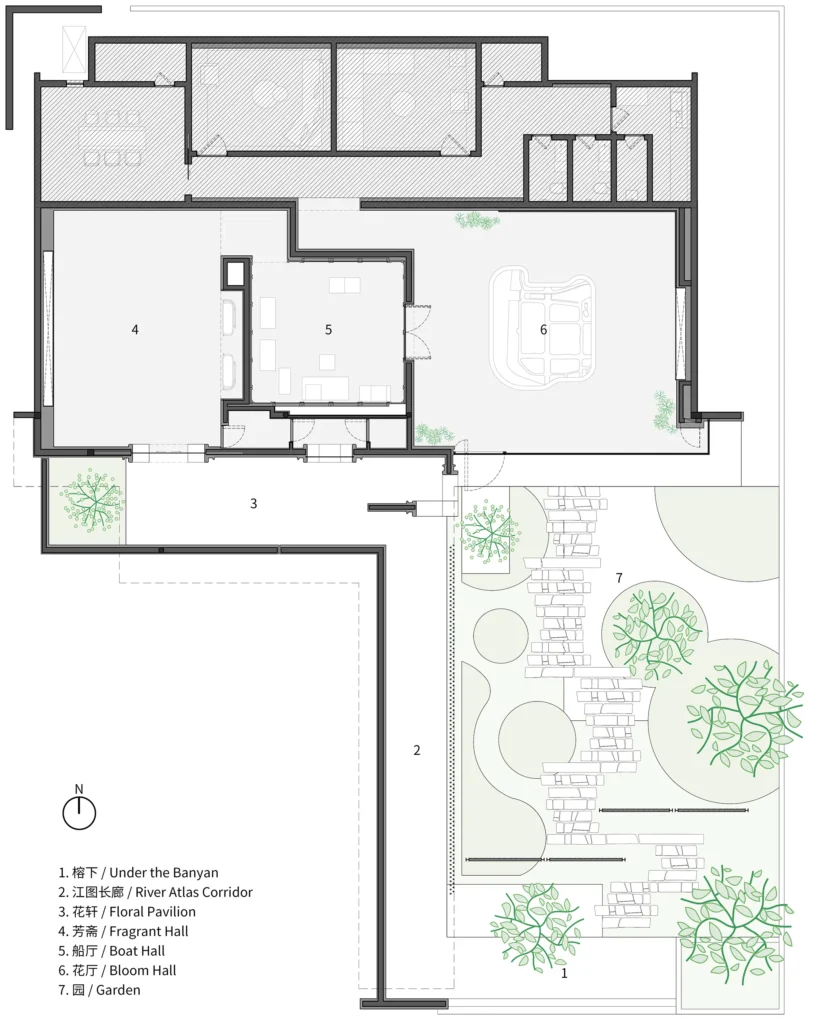
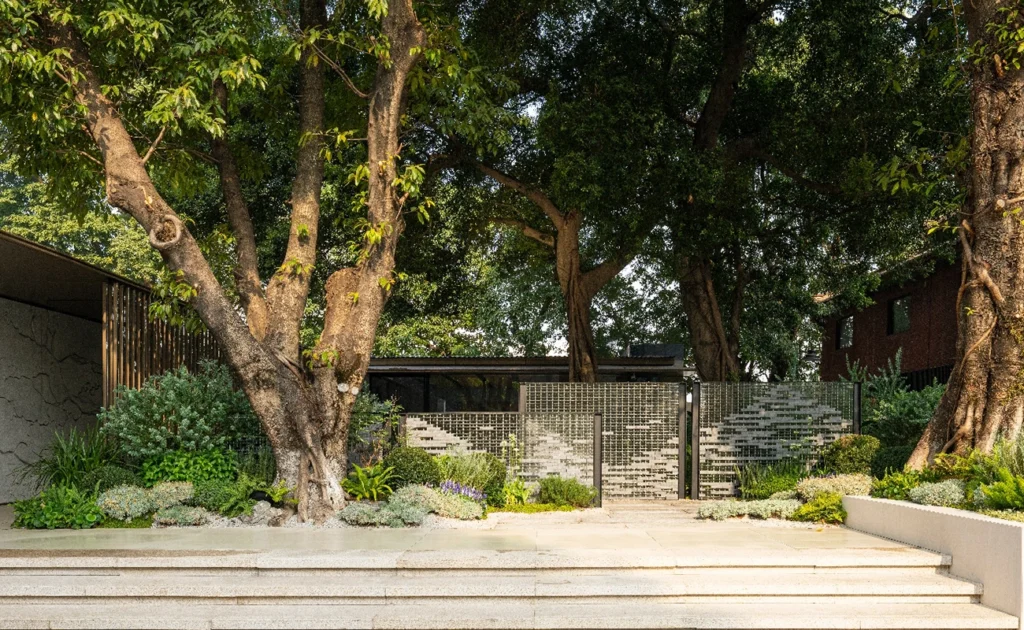
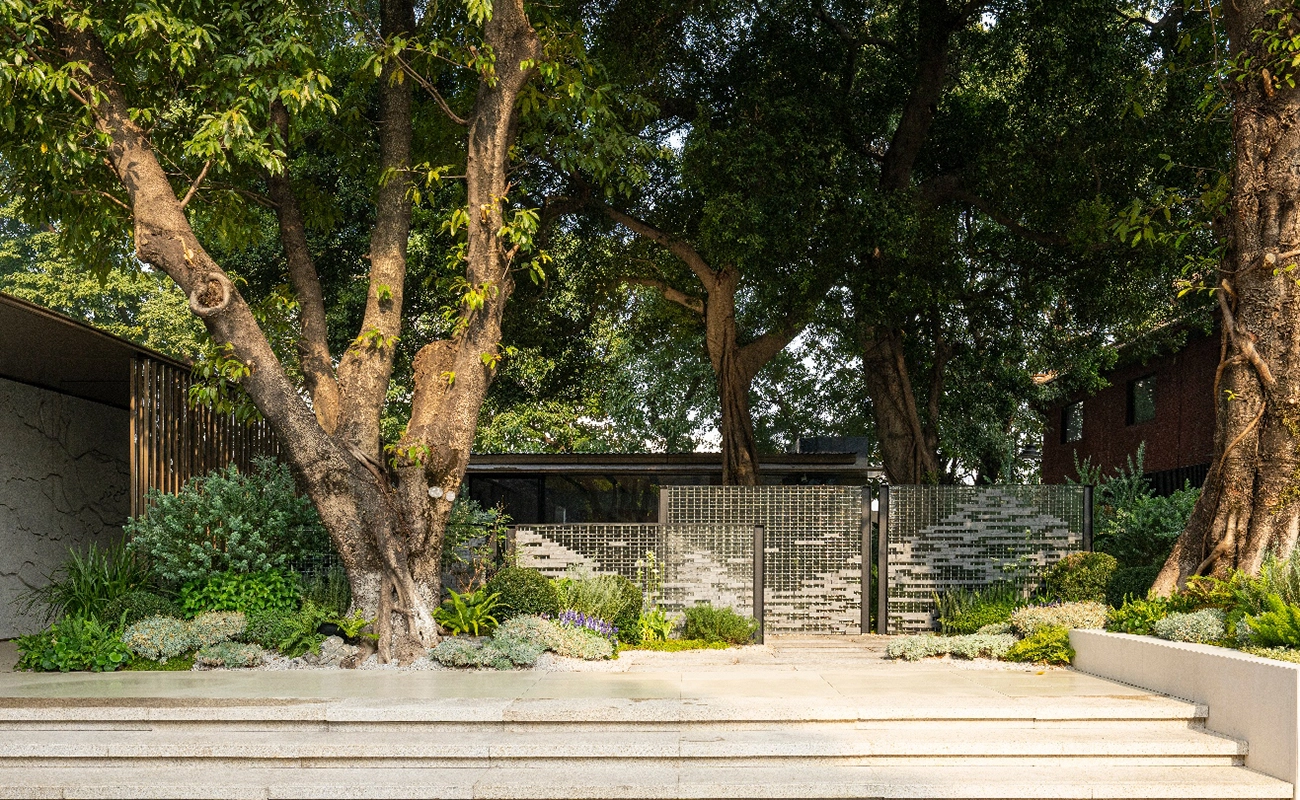
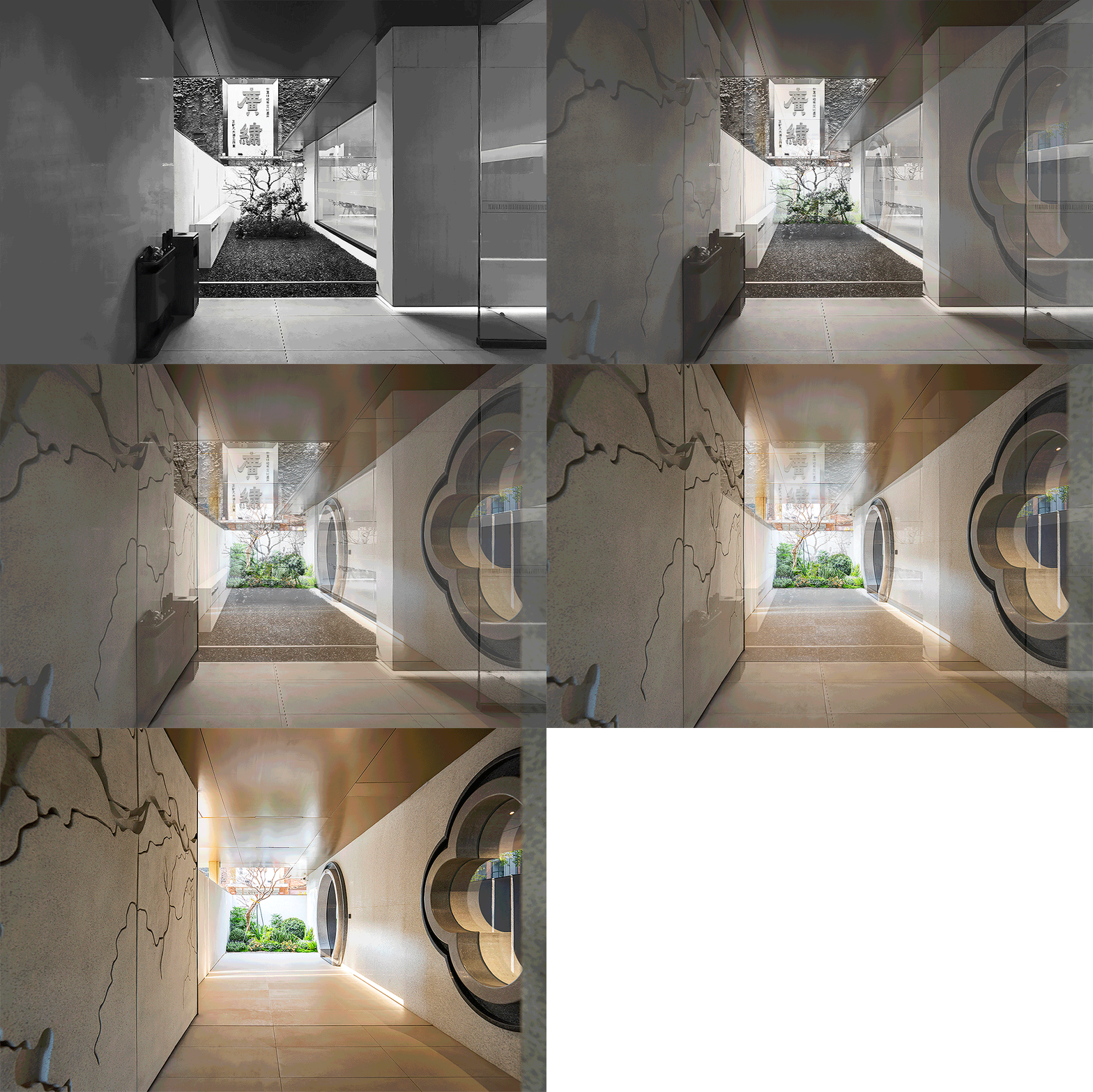
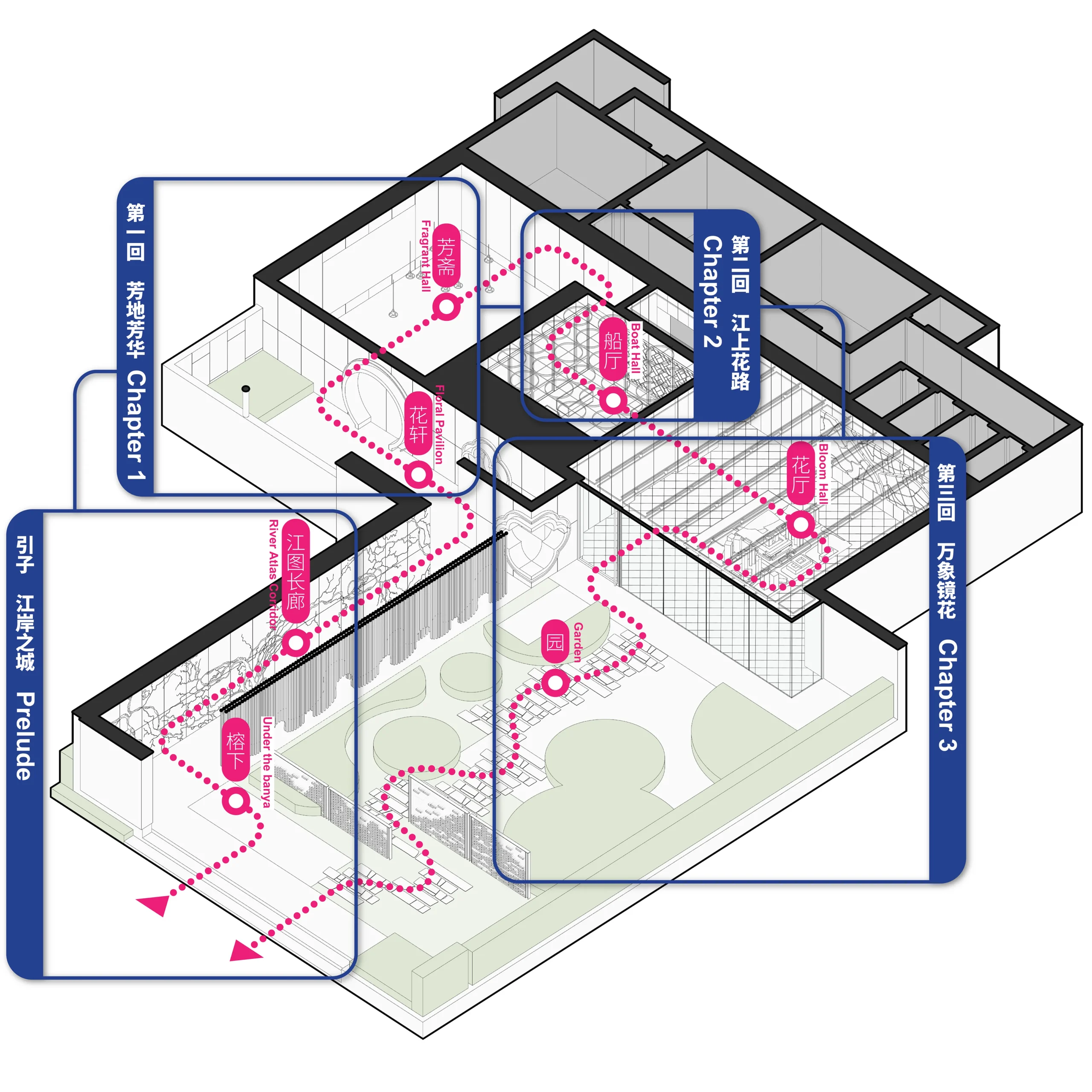
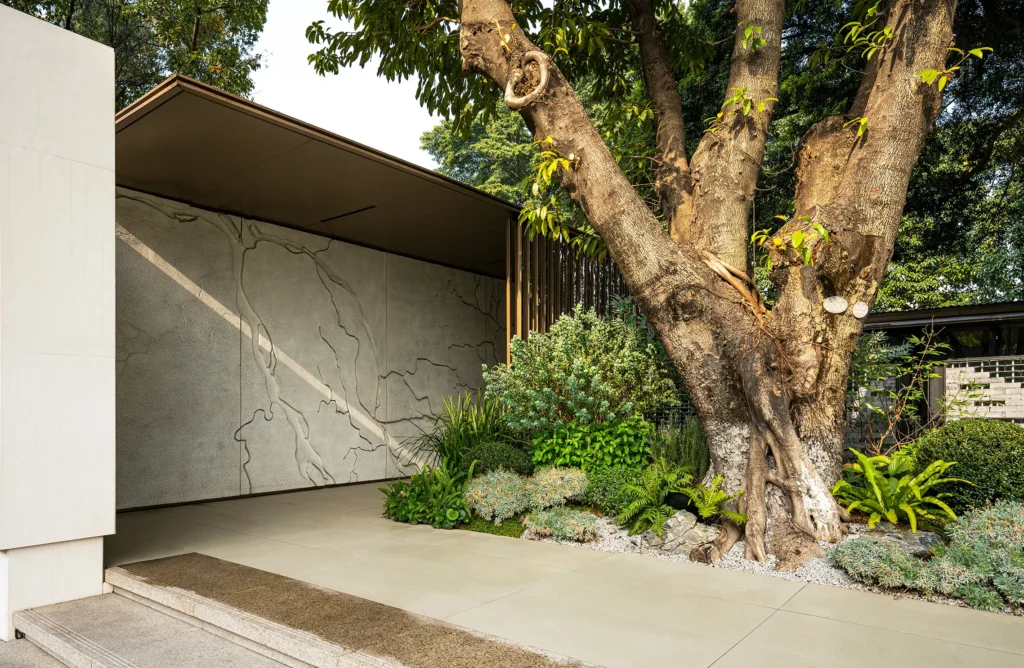
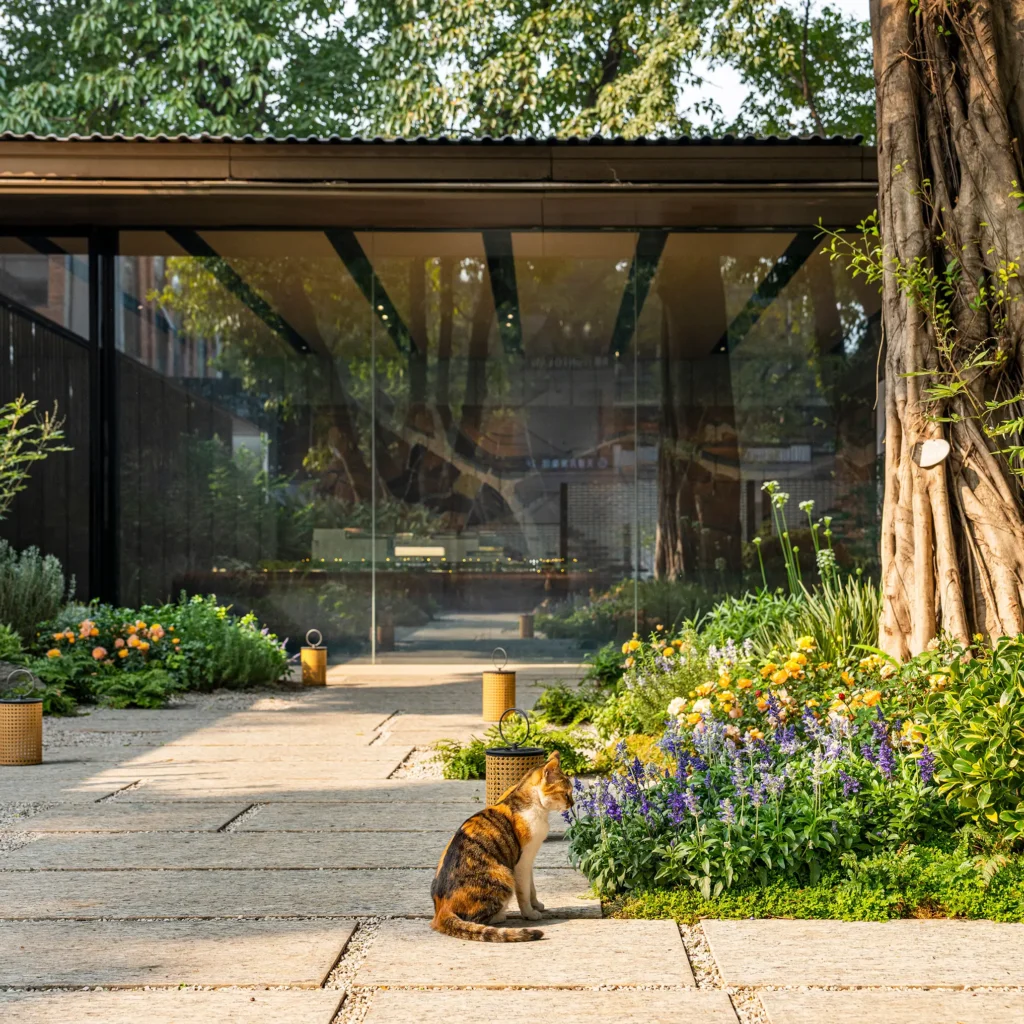
The journey begins beneath the banyan trees, a threshold of collective memory in the southern context. A subtle sound of departure draws visitors into the sequence.
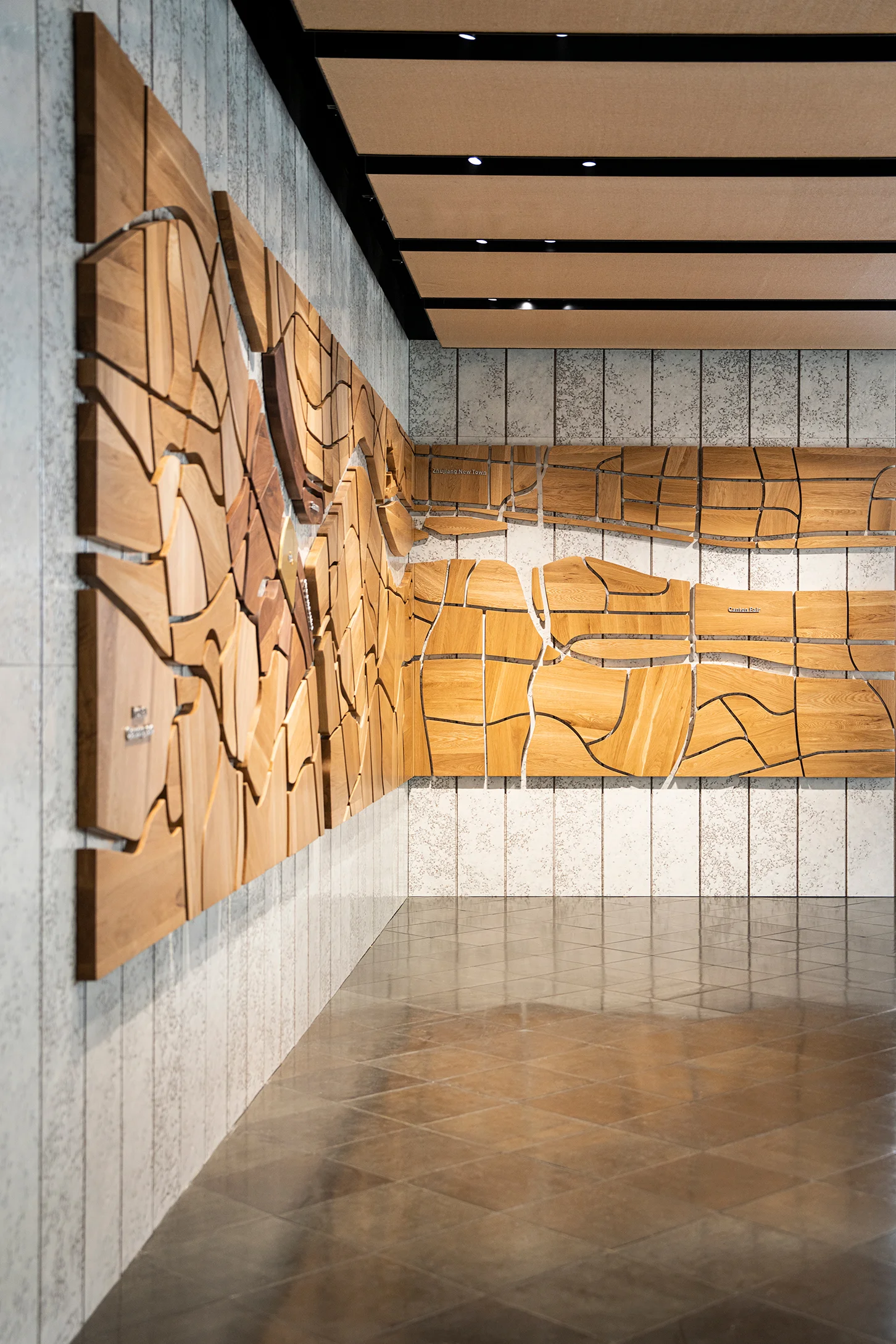
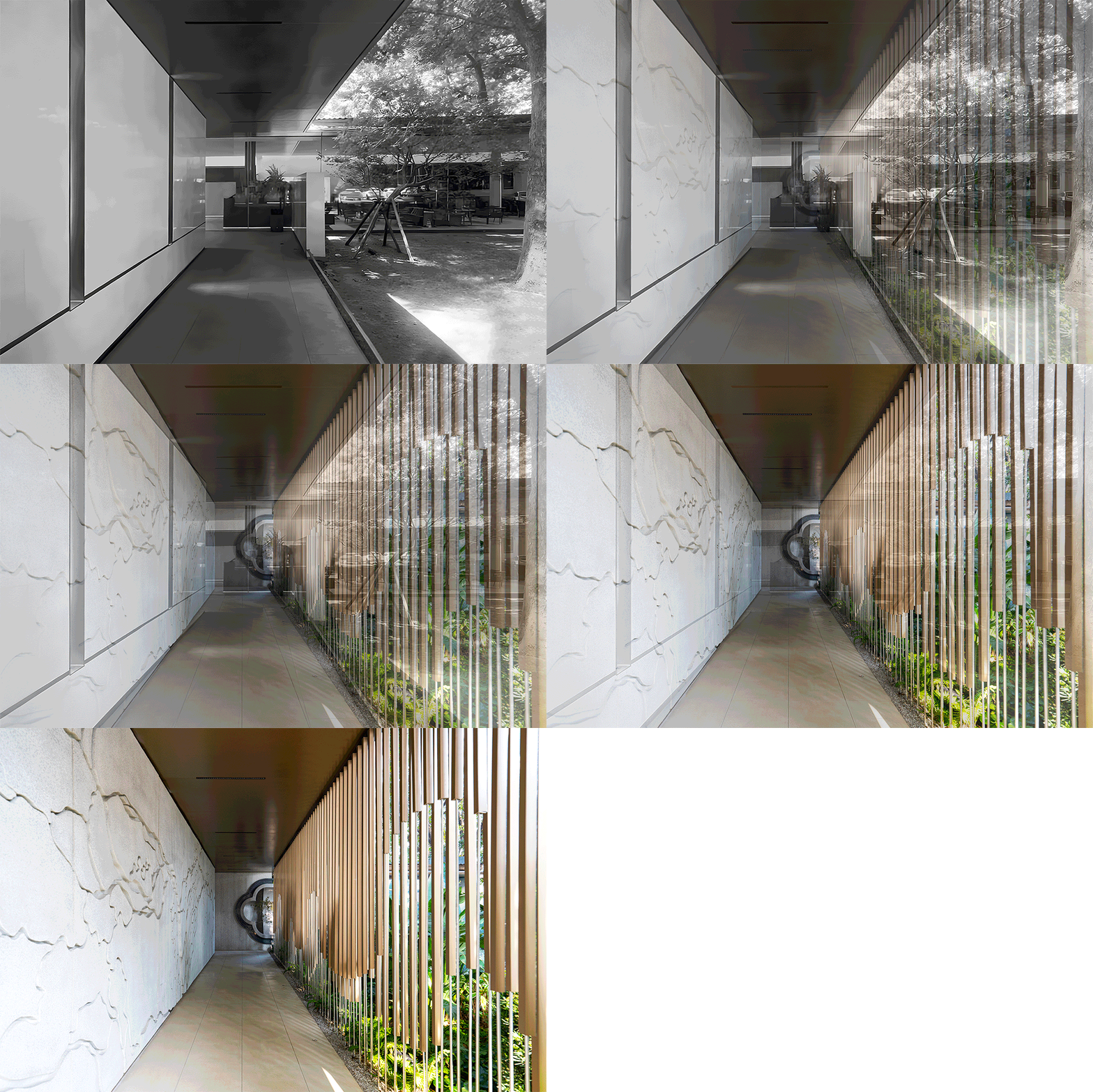
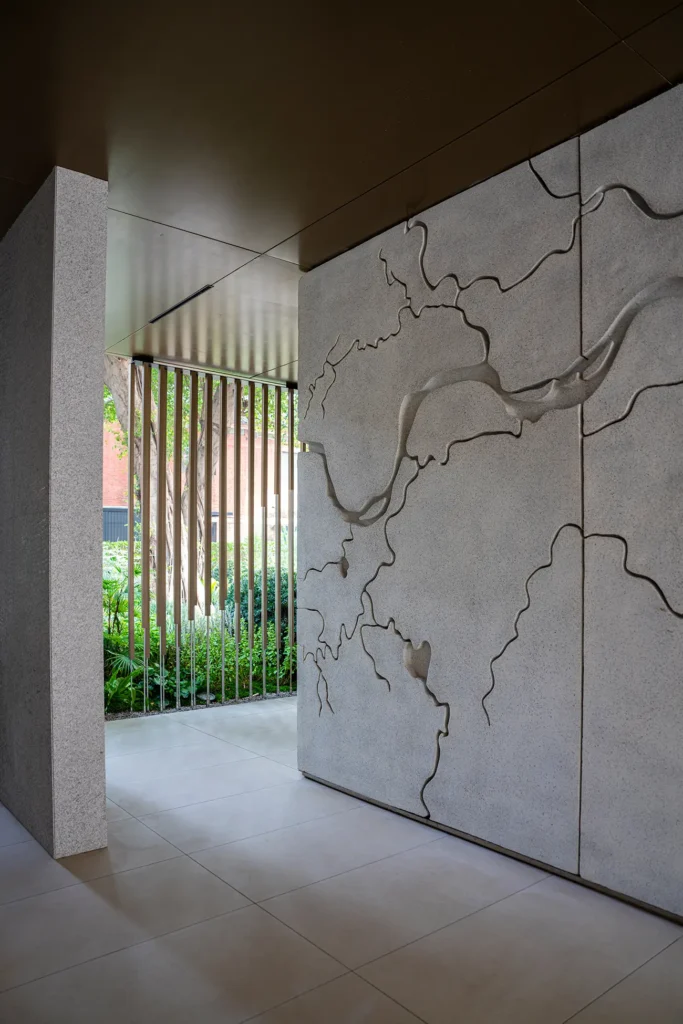
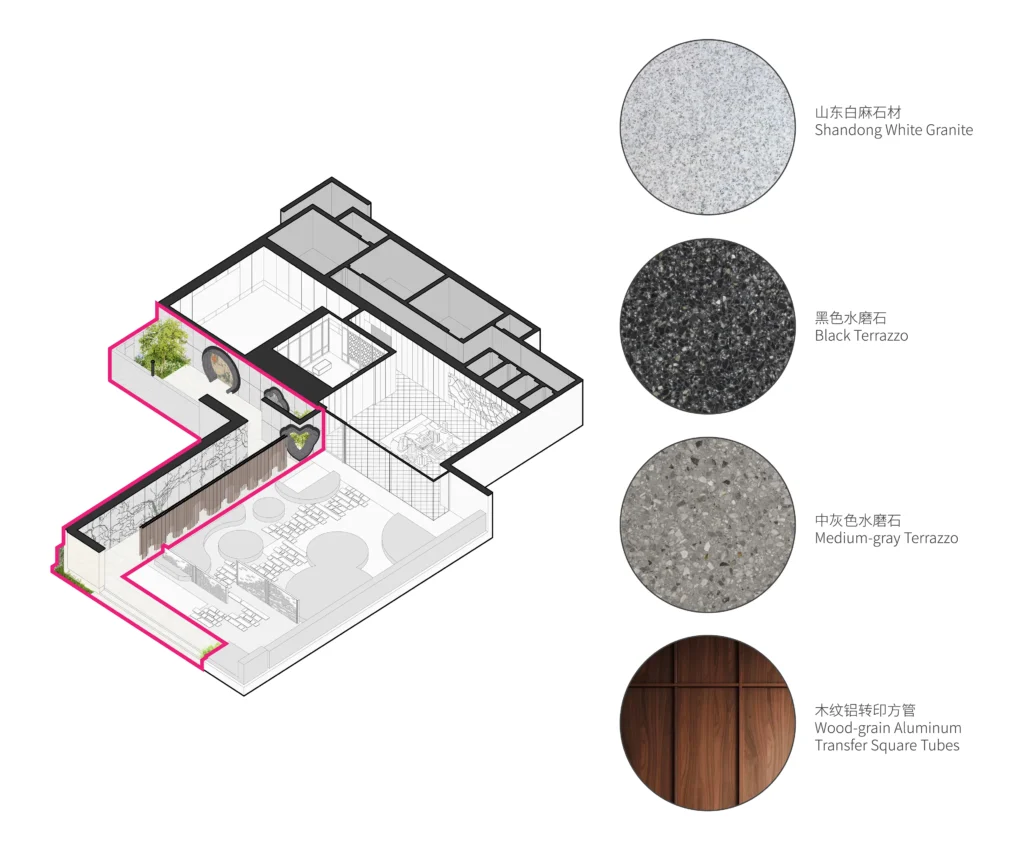
From here, the route travels down the River Atlas Corridor, where stone relief traces the Dong-Jiang waterways while the “wok-ear wall” pattern screen evokes the urban fabric, accompanied by echoes of merchants and seagulls.
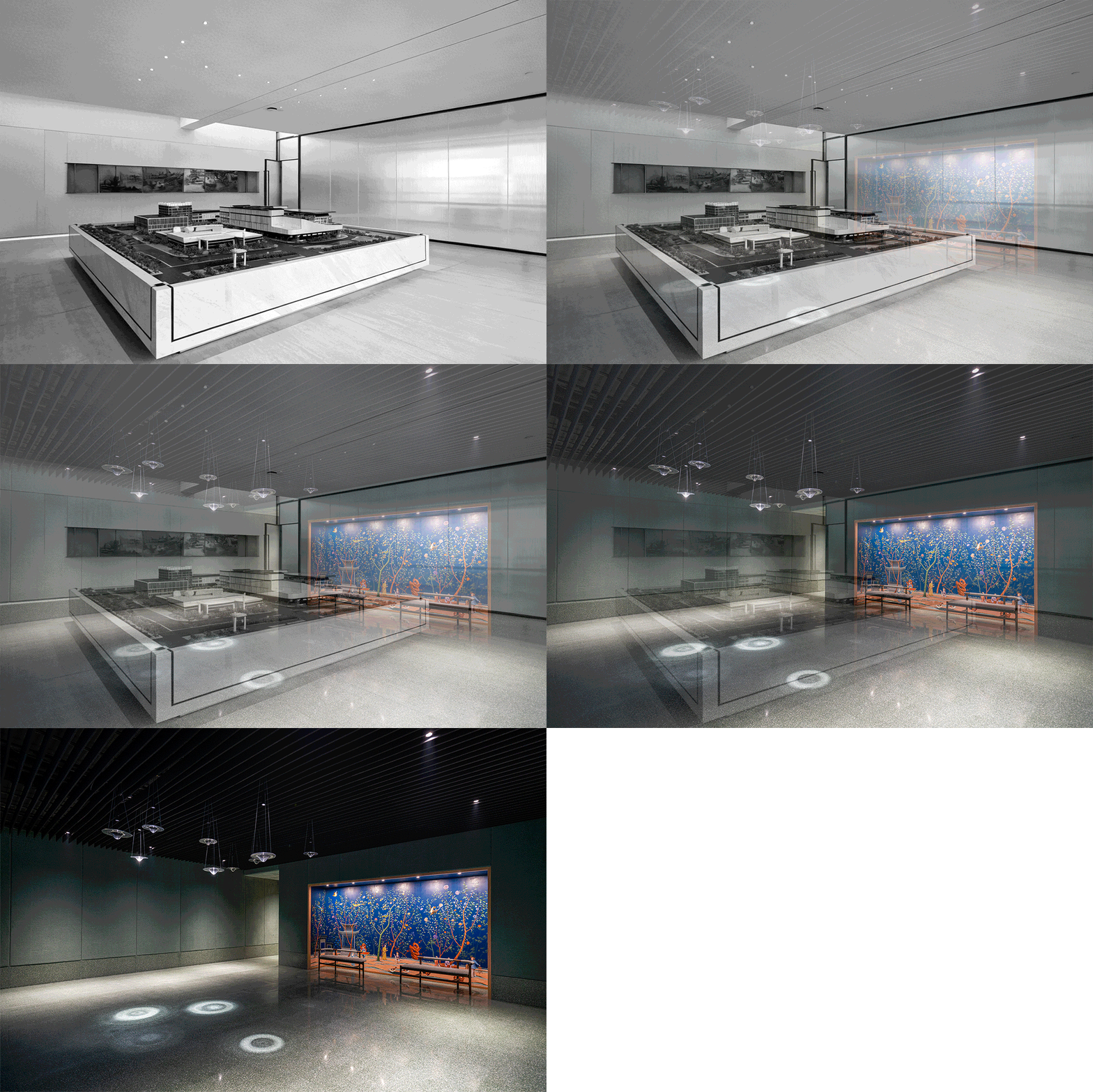
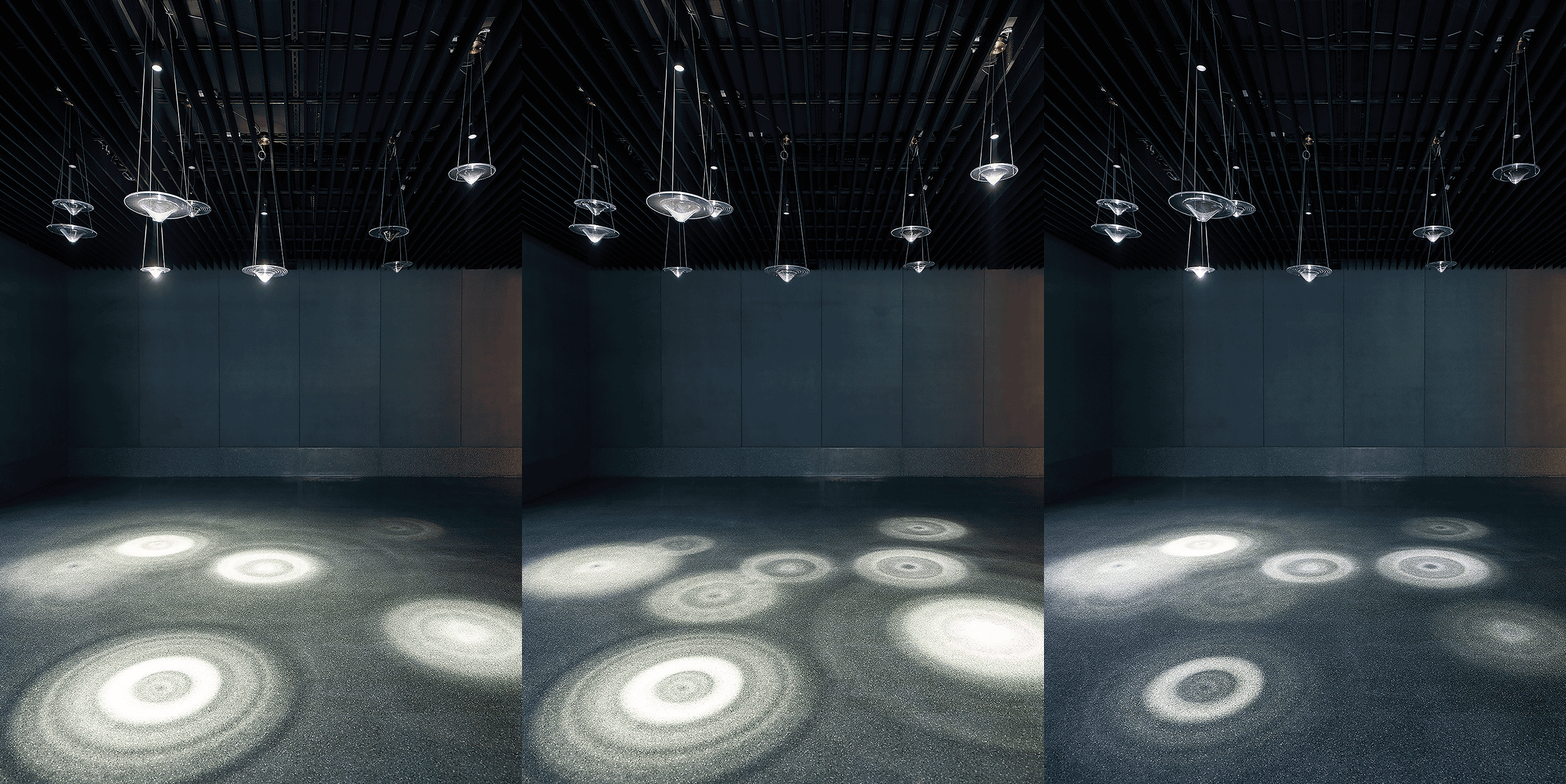
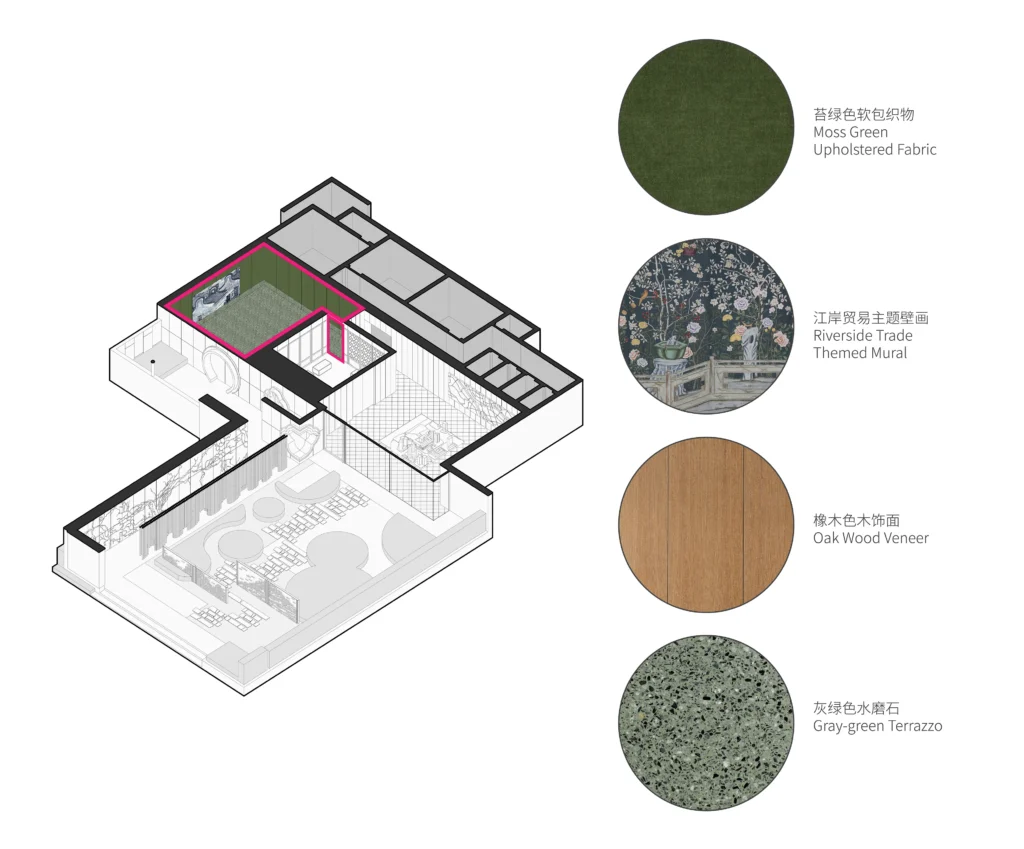
The path then enters the Fragrant Hall, where rain sound and shimmering light unfold the story of roses traveling from Fatee to the world.
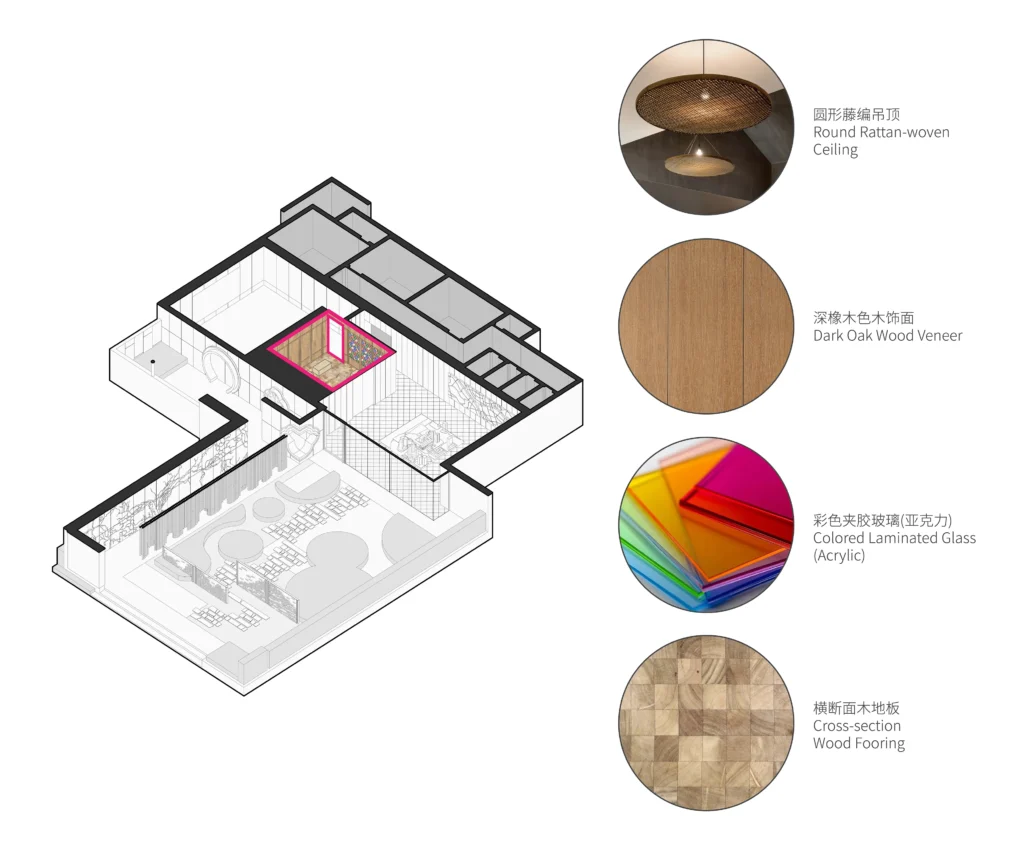
Continuing onward, one boards the Boat Hall, where the voyage becomes tangible, carrying flowers bound for the sea.
As the voyage concludes, the cabin opens, unfolding onto the panorama of Mixc.
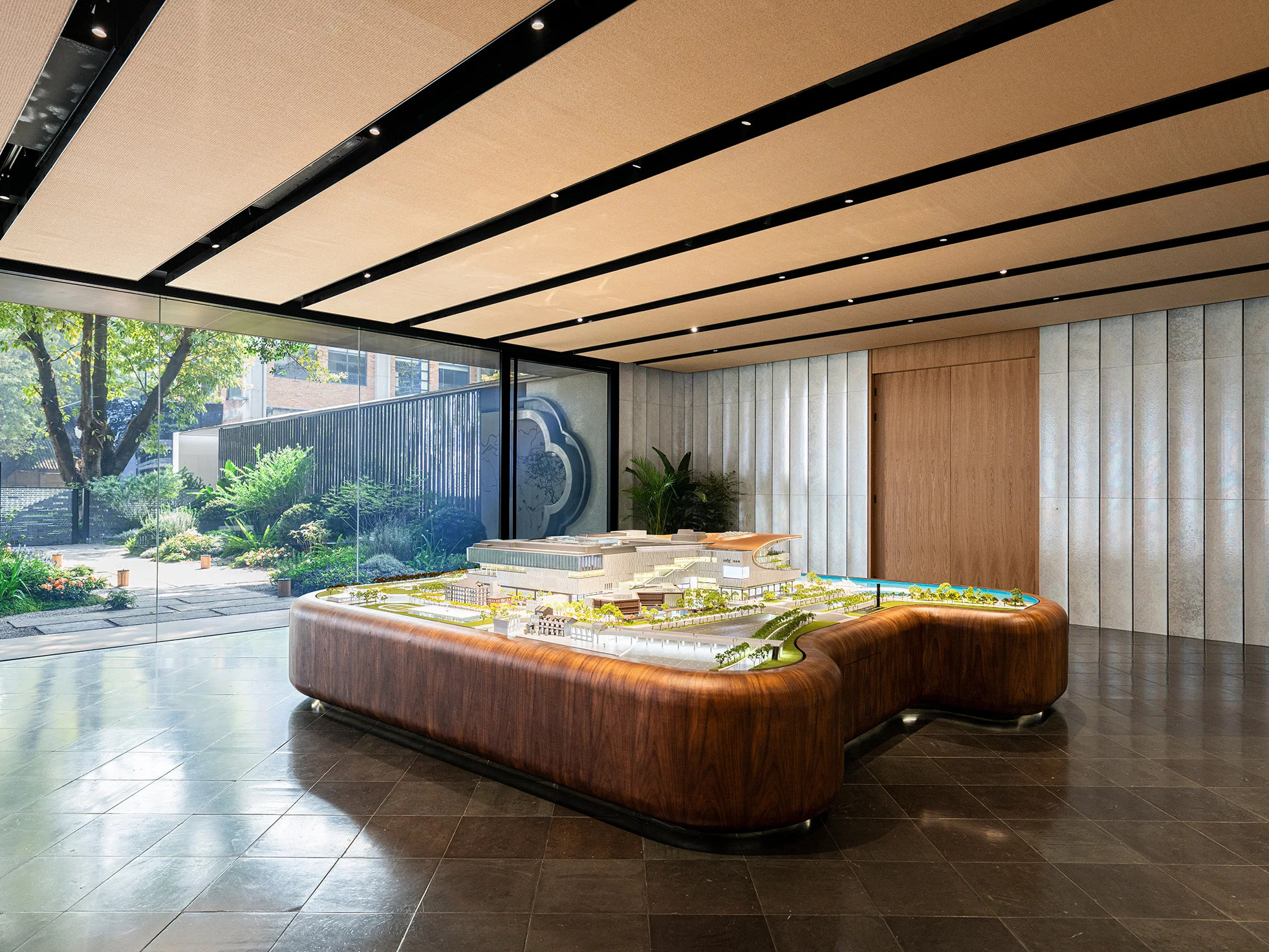
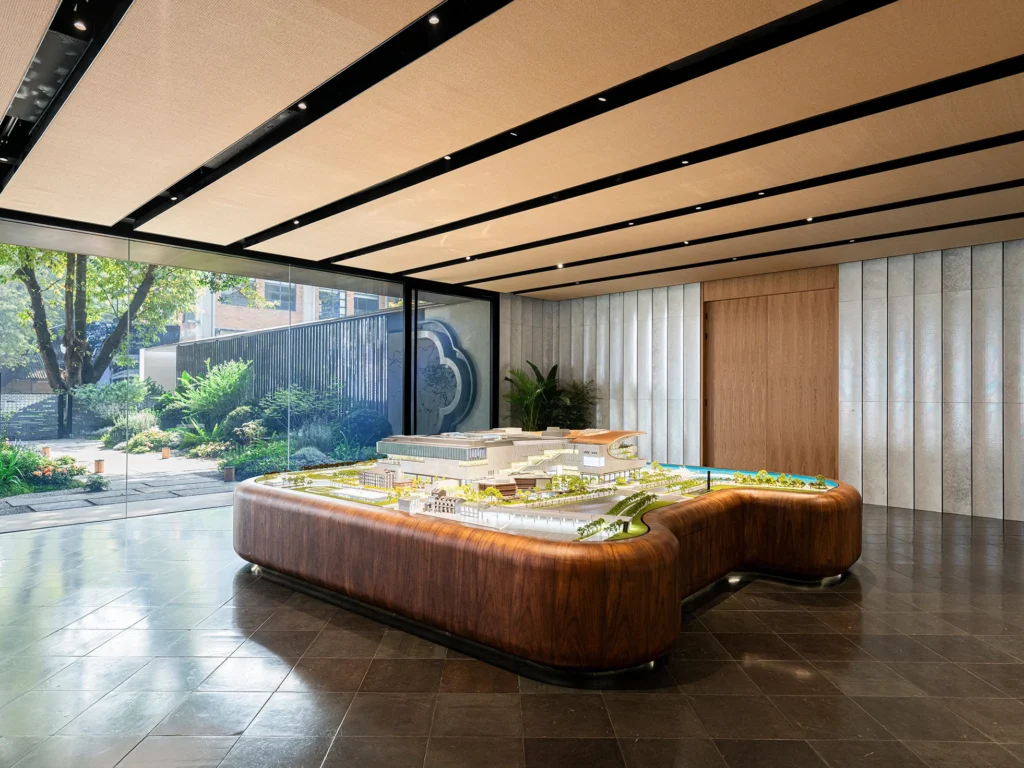
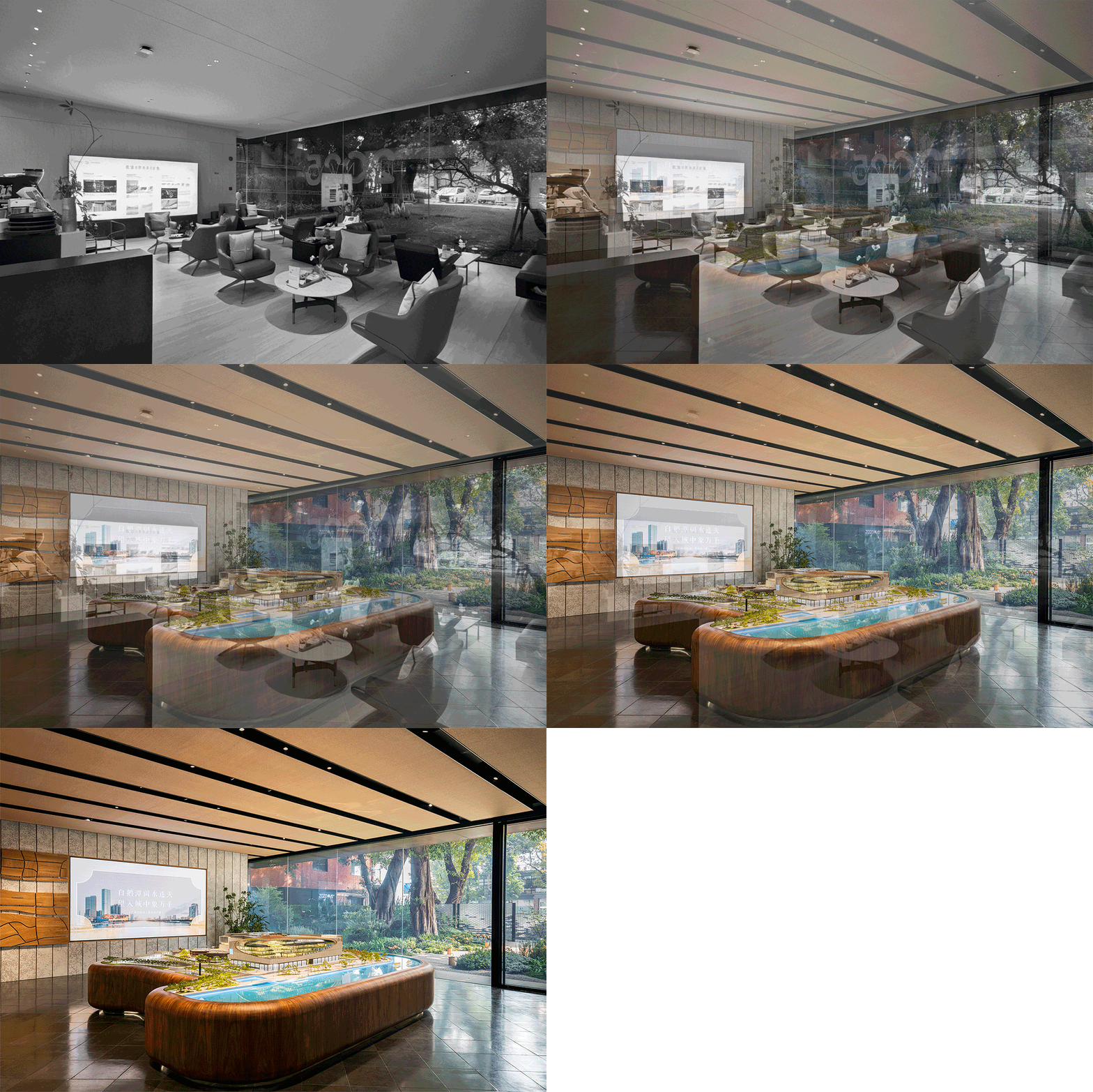
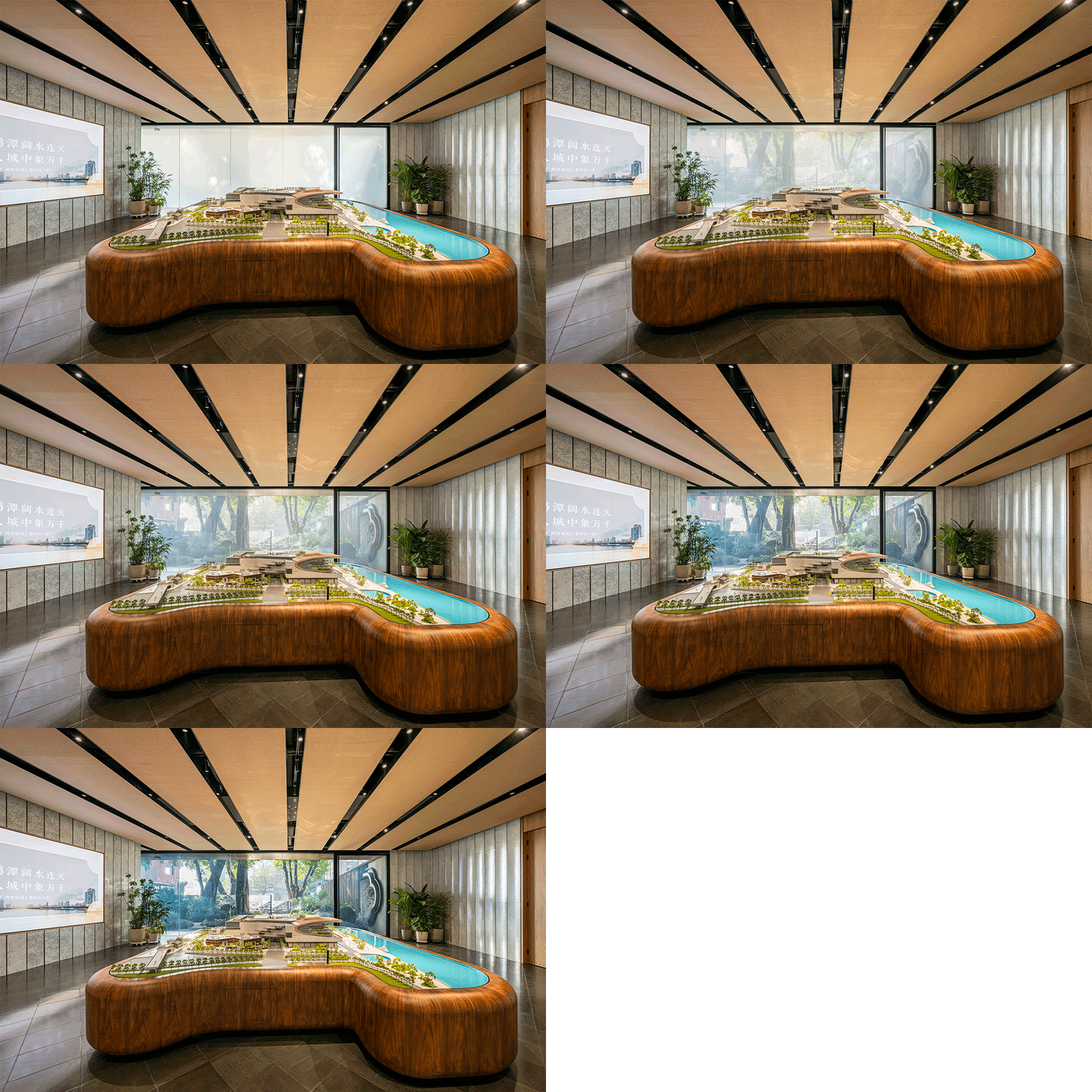
Beyond lies Bloom Hall, the main gallery, presenting the future vision of GZ BAIETAN Mixc.
Almost unnoticed, the frosted interface quietly dissolves to reveal a garden beyond, where the journey continues outward into nature, city, and future.
A Garden in Full Bloom
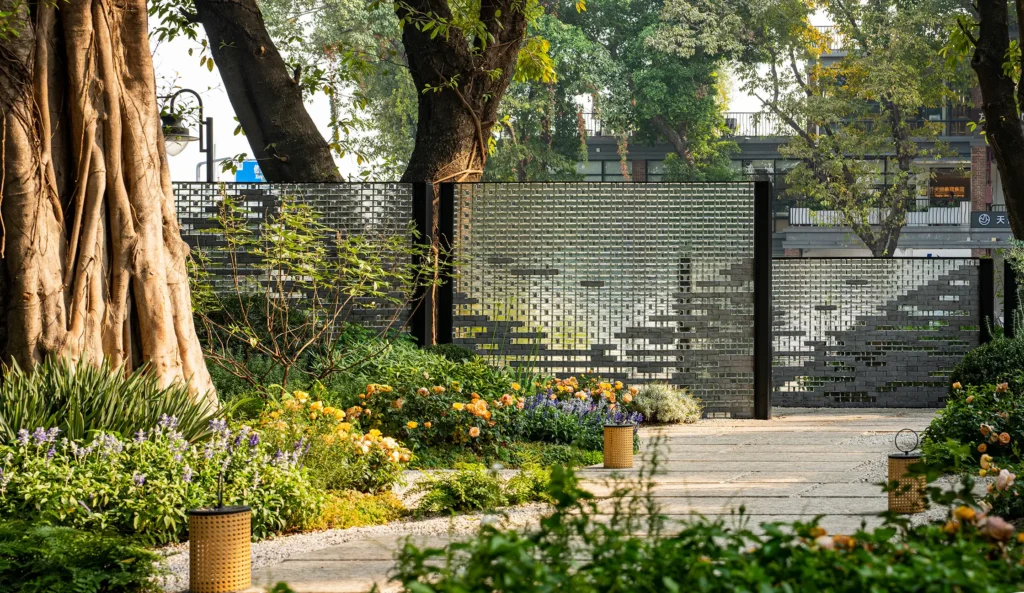
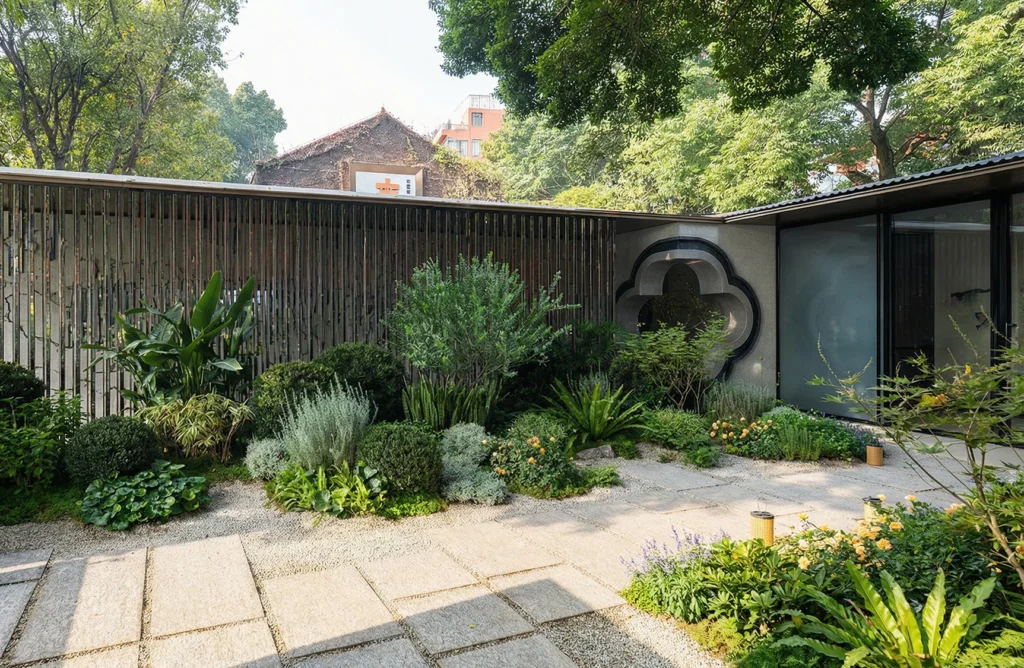
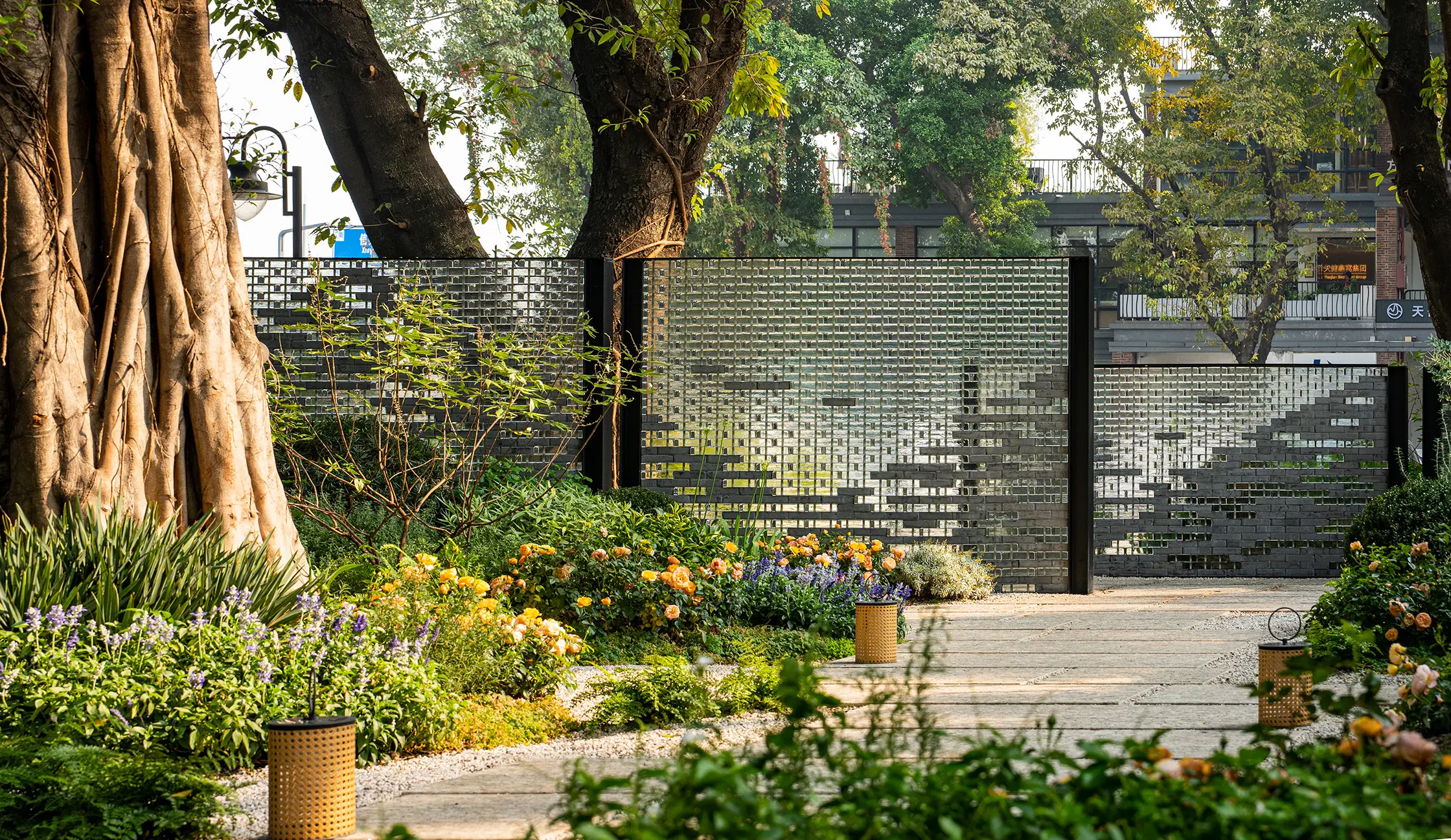
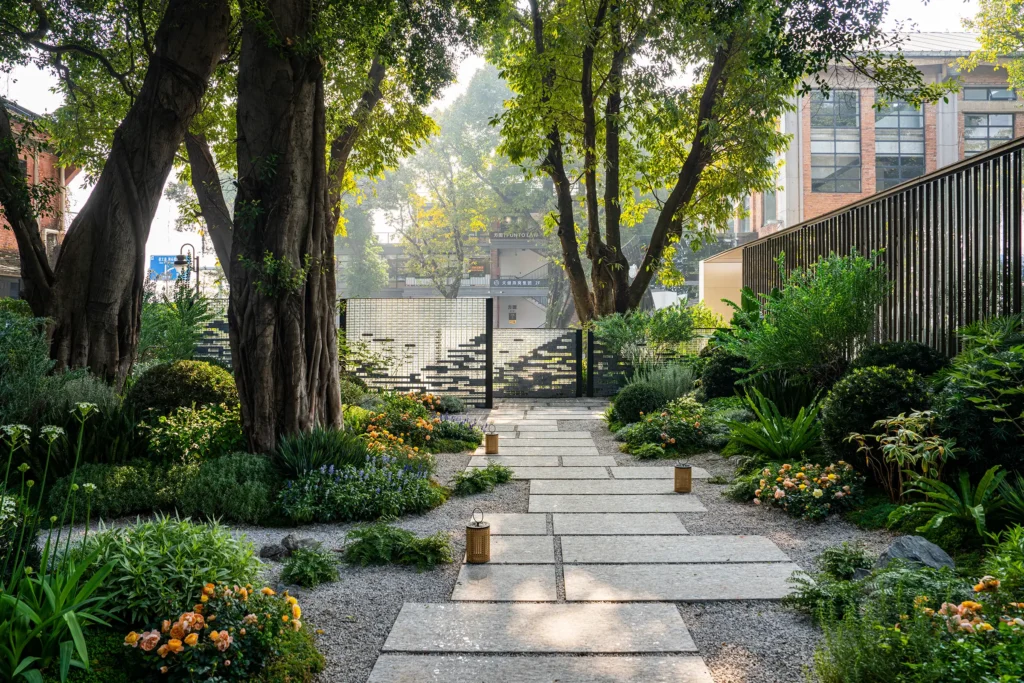
Stepping outside, the garden weaves in the final chapter of the spatial narrative. Existing banyan trees shape the scale and atmosphere, offering a place to pause and look back. Beneath their canopies, the visit begins and concludes, forming a spatial loop.
Within the garden, winding paths shift the rhythm from interiors to a relaxed outdoor experience. Seasonal flower beds no longer tell specific stories, but leave fragrant tales lingering in the air, light, and time – evoking “blossoming Mixc”.
One last look.
Narrative through Materials
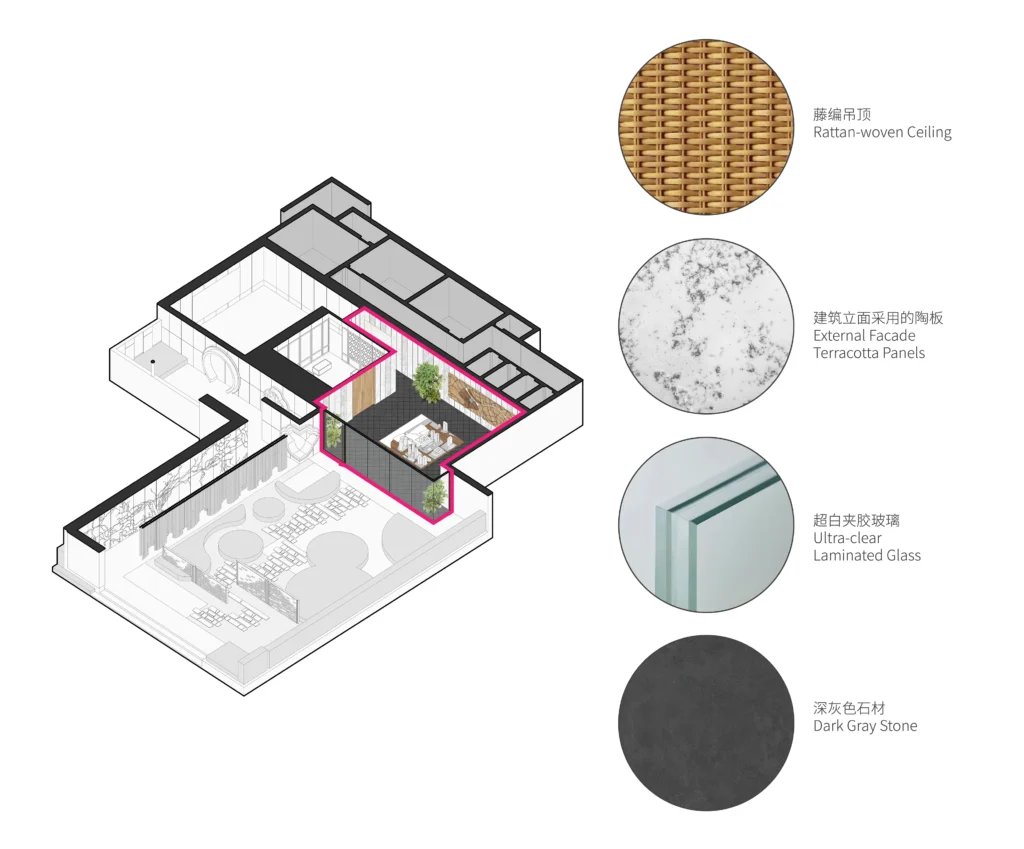
Materials link visual and tactile expression with the memory of the site. Through the contrast of textures and forms, the design responds to the urban character of Fatee and connects past with present.
Prelude | City by the River
Chapter 1 | Fatee Glamour
Chapter 2 | Floral Journey
Chapter 3 | Kaleidoscope called Mixc
Finale | Blooming Garden
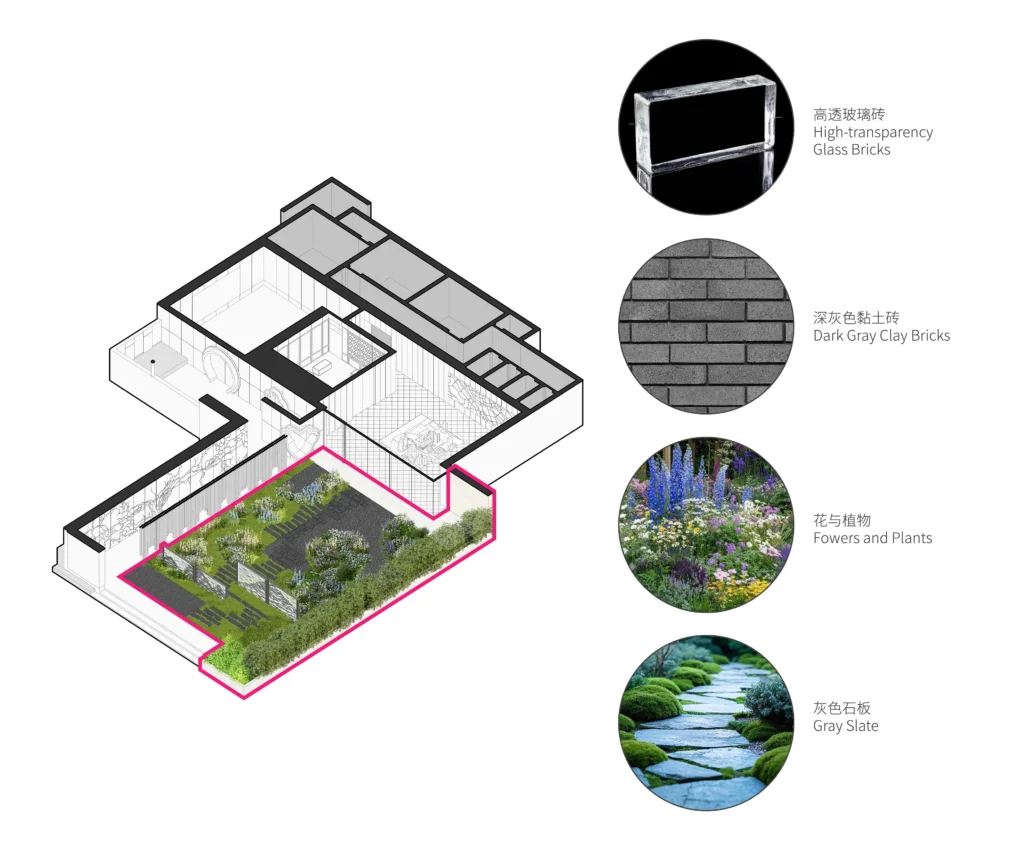
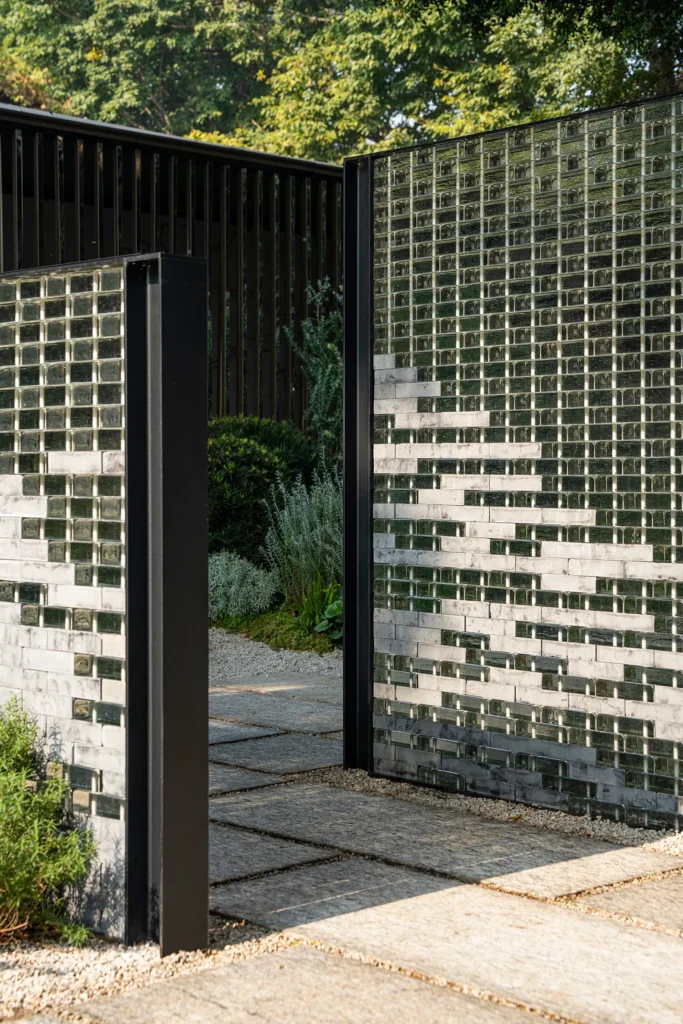
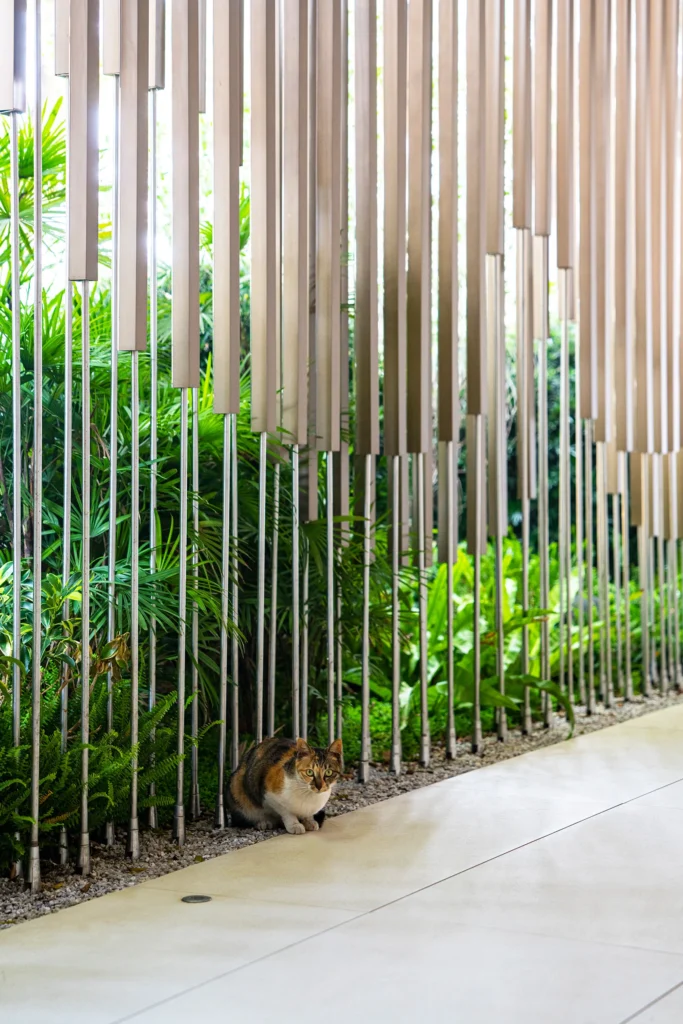
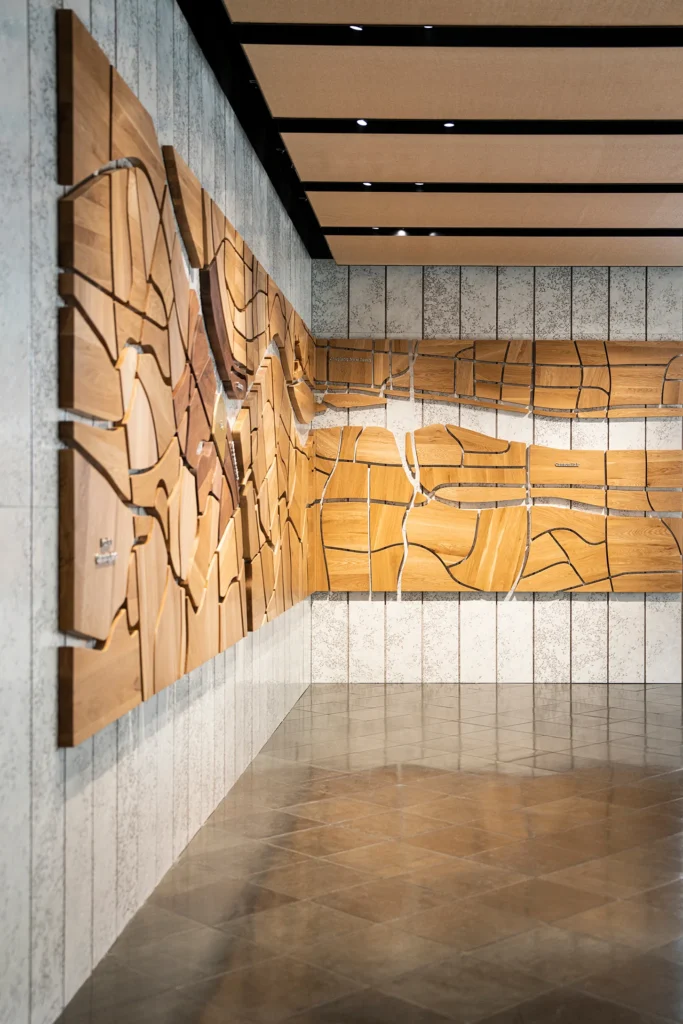
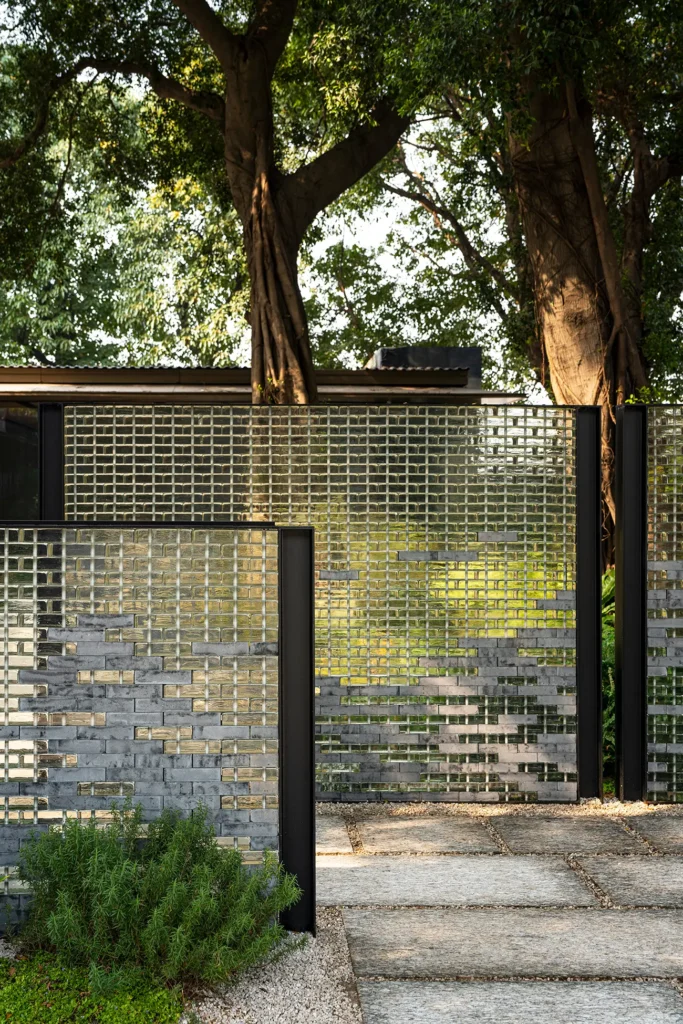
Heavier materials anchor local historical narrative: grey and glass brick screens evoke distant mountains, stone relief traces Guangzhou’s waterways, and rhythmic grilles reinterpret the wok-ear wall pattern.
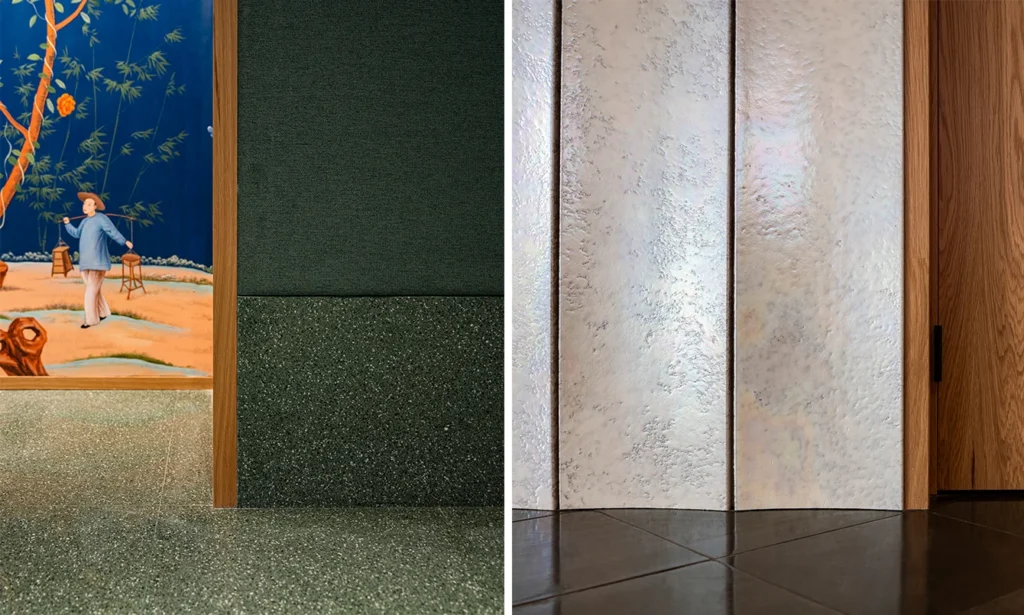
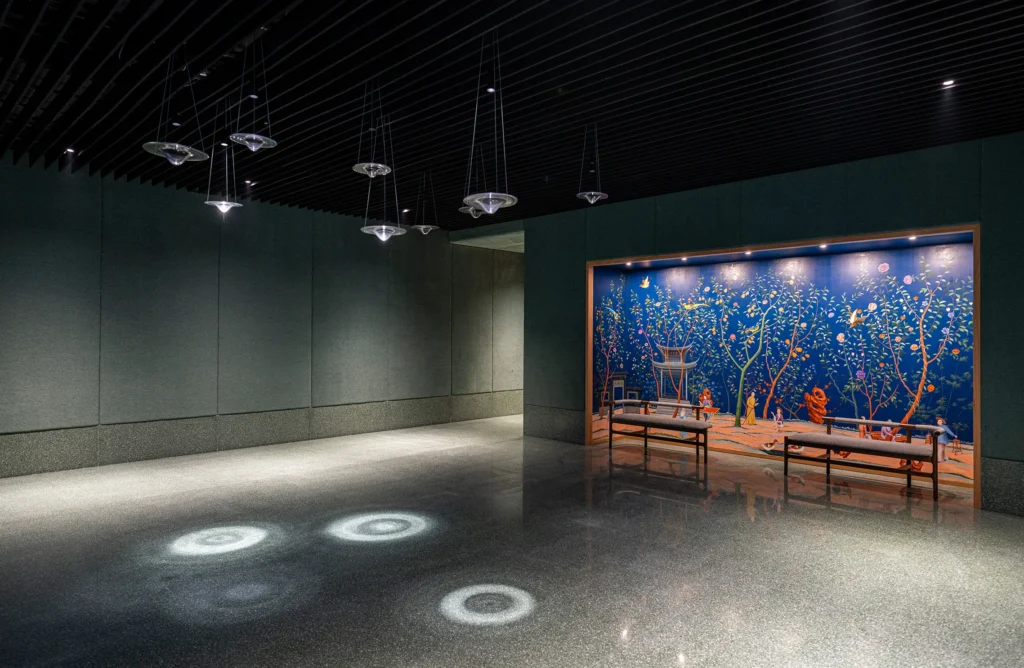
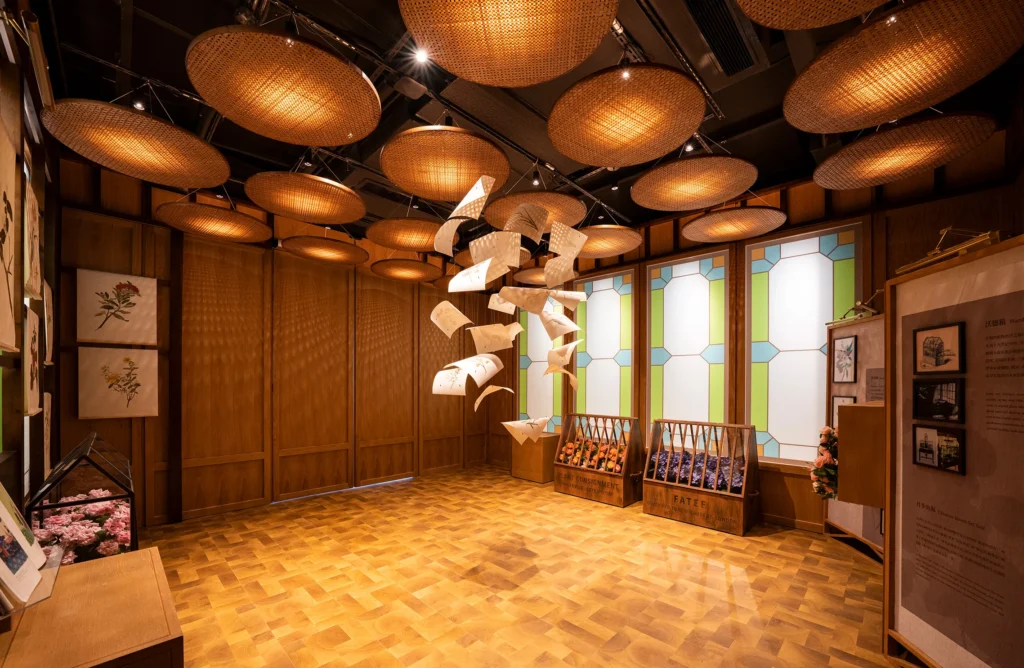
In contrast, lighter materials shape an intimate atmosphere. The raindrop chandelier creates subtle light, while murals of riverside trade, Manchurian windows, and bamboo ceilings form a warm, everyday space.
Meanwhile, the same facade material at GZ BAIETAN Mixc is applied onto the walls of Bloom Hall, allowing visitors to perceive its real scale and texture and turning the vision of the future project into a tangible experience.
At its core, the GZ BAIETAN MixC exhibition space uses architecture as a medium through which history, culture, and contemporary life, meet in moments of movement and pause.
The story does not end with the visit, but lingers in subtle details and continuous perception, becoming a gradual and personal way to understand Fatee and the city.
“Stories carry out a labor that constantly transforms places into spaces.”
– Michel de Certeau
The Practice of Everyday Life
Baietan Mixc Exhibition Space
GZ BAIETAN Mixc is located in Fatee, Fangcun of Guangzhou, a place shaped by water transport and long renowned for its flower culture. This area carries a profound historical lineage and forms an important origin of Lingnan garden tradition and literati aesthetics. Rooted in this context, the project develops an exhibition space that translates local memory through contemporary spatial language, allowing heritage to continue within a present-day setting.
Location | Guangzhou, China
Programme | Commercial Leasing Exhibition Space
Client | CR Mixc Lifestyle
GFA | 688m2
Work Scope | Landscape – Concept
Interiors – Concept, SD, DD, CD, CA
Current Status | Completed
Transformation of Spatial Functions
The original site lies within Xinyi Guild Hall along the Pearl River, about 1.5 km from GZ BAIETAN Mixc. The building, formerly a residential sales reception center, was organized around open negotiation areas for efficient client service.
The renovation reorganizes spatial function by refining circulation, enhancing privacy and comfort, and introducing a coherent exhibition logic with local cultural references.
The space is thus transformed from a reception-oriented venue into a narrative exhibition setting, bringing renewed value and vitality to the building.
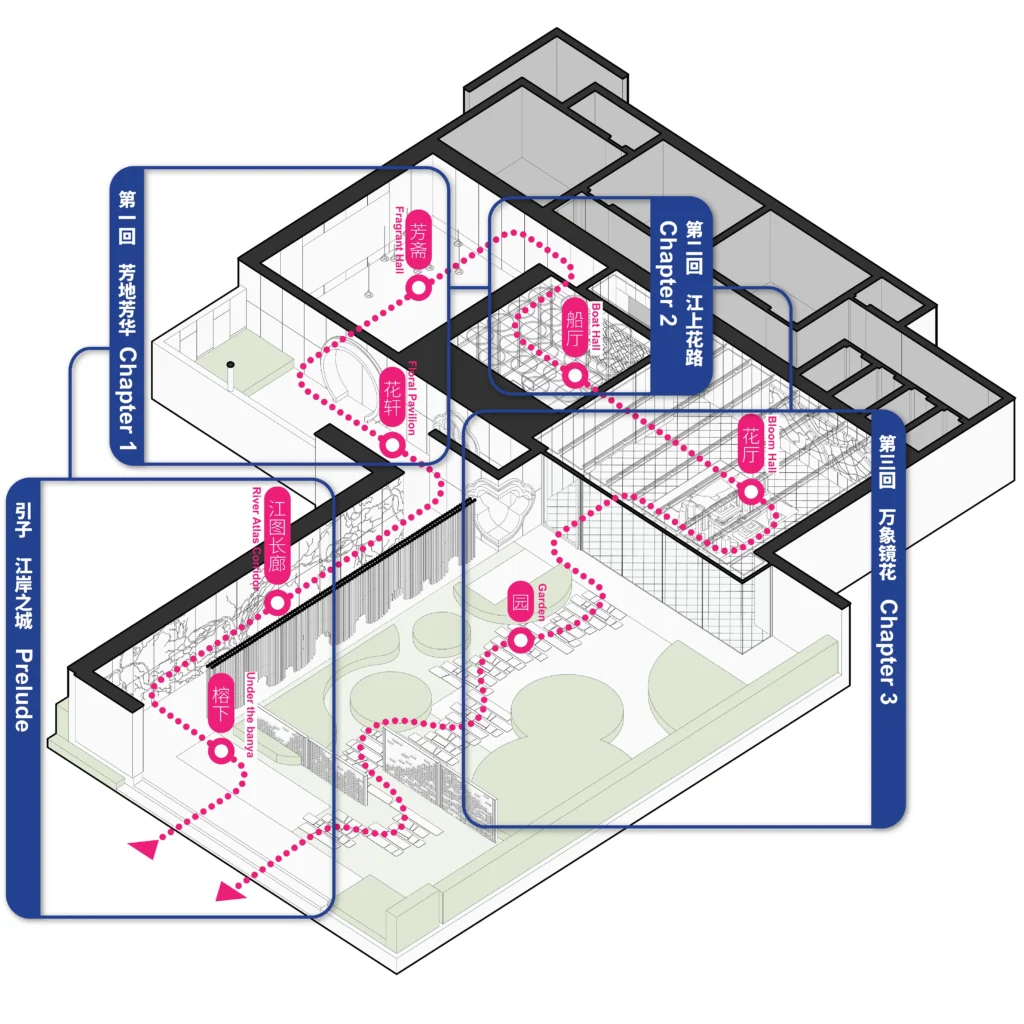
Axo digram: exhibition circulation
A Walk in the Garden
Drawing on Lingnan garden principles, the design translates the idea of “changing views with every step” into a contemporary exhibition route.
Garden wandering circulation diagram
Screens, turns, framed views, and borrowed scenery mediate between concealment and revelation, contraction and release, guiding visitors to perceive the history of Fatee through movement. The visit becomes a layered and rhythmic spatial experience.
Like a walk in a Lingnan garden, exhibition goers discover a new “scene” at every turn at this Baietan Exhibition.
Co-creation of Narrative & Space
The exhibition narrative took shape through an iterative dialogue between the design team and client, with the storyline and spatial sequence developed in tandem. The visitor route was refined until content, space, and atmosphere joined together coherently, translating them into a perceptible spatial progession.
Beyond conventional exhibits, multi-sensory elements such as sounds, scents, and lighting were introduced, allowing an immersive story to emerge, guiding movement, marking transitions, and defining moments of pause.
The journey begins beneath the banyan tree, a threshold of collective memory in the southern context. A subtle sound of departure draws visitors forward into the sequence. From here, the route travels down the River Atlas Corridor, where stone relief traces the Dong-Jiang waterways while the “wok-ear wall” pattern screen evokes the urban fabric, accompanied by echoes of merchants and seagulls.
The path then enters the Fragrant Hall, where rain sound and shimmering light unfold the story of roses traveling from Fatee to the world. Continuing onward, one boards the Boat Hall, where the voyage becomes tangible, carrying flowers bound for the sea.
As the voyage concludes, the cabin open, unfolding onto the panorama of Mixc.
Beyond lies Bloom Hall, the main gallery, presenting the future vision of GZ BAIETAN Mixc. Almost unnoticed, the frosted interface quietly dissolves to reveal a garden beyond, where the journey continues outward into nature, city, and future.
A Garden in Full Bloom
Stepping outside, the garden weaves in the final chapter of the spatial narrative. Existing banyan trees shape the scale and atmosphere, offering a place to pause and look back. Beneath their canopies, the visit begins and concludes, forming a spatial loop.
Within the garden, winding paths shift the rhythm from interiors to a relaxed outdoor experience. Seasonal flower beds no longer tell specific stories, but leave fragrant tales lingering in the air, light, and time – evoking “blossoming Mixc”.
Narrative through Materials
Materials link visual and tactile expression with the memory of the site. Through the contrast of textures and forms, the design responds to the urban character of Fatee and connects past with present.
Prelude | City by the River
Chapter 1 | Fatee Glamour
Chapter 2 | Floral Journey
Chapter 3 | Kaleidoscope called MixC
Finale | Blooming Garden
Heavier materials anchor the local historical narrative: grey and glass brick screens evoke distant mountains, stone relief traces Guangzhou’s waterways, and rhythmic grilles reinterpret the wok-ear wall pattern.
In contrast, lighter materials shape an intimate atmosphere. The raindrop chandelier creates subtle light, while murals of riverside trade, Manchurian windows, and bamboo ceilings form a warm, everyday space.
Meanwhile. the same facade material at GZ BAIETAN Mixc is applied onto the walls of Bloom Hall, allowing visitors to perceive its real scale and texture and turning the vision of the future project into a tangible experience.
At its core, the GZ BAIETAN MixC exhibition space uses architecture as a medium through which history, culture, and contemporary life, meet in moments of movement and pause.
The story does not end with the visit, but lingers in subtle details and continuous perception, becoming a gradual and personal way to understand Fatee and the city.
“Stories carry out a labor that constantly transforms places into spaces.”
– Michel de Certeau
The Practice of Everyday Life